

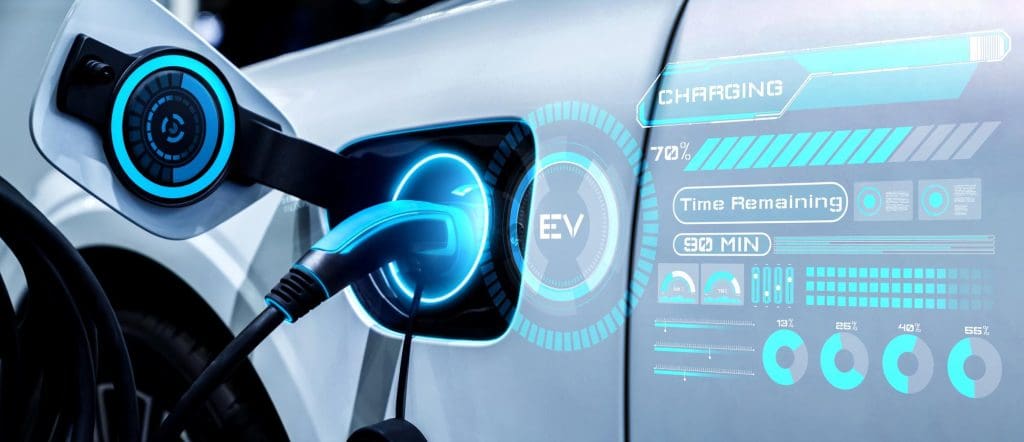
Britain’s electric vehicle charging network is growing rapidly, but as more drivers make the switch to electric motoring, one important question is becoming increasingly relevant: can motorists trust the charging information they see?
From incorrect charging prices and outdated availability information to chargers appearing in the wrong location, inaccurate data can turn what should be a straightforward charging stop into an unnecessarily frustrating experience.
As the UK continues to invest in public charging infrastructure, the accuracy and reliability of the information supporting that network could be just as important as the number of chargers being installed.
Britain’s EV charging network is growing, but data quality matters
The UK’s transition to electric motoring continues to accelerate.
According to the Department for Transport’s official statistics, the UK had 121,171 public EV chargers as of 1 July 2026, including 28,887 rapid and ultra-rapid chargers delivering power of 50kW or above.
These figures demonstrate the scale of investment taking place across the country, with charging infrastructure becoming increasingly accessible at motorway services, retail destinations, public car parks and residential locations. Our overview of public EV charging in 2026 looks more closely at the network’s growth and the practical experience for drivers.
However, as the network grows, so does the volume of information that needs to be collected, maintained and shared.
Every public charging location can generate multiple pieces of information, including its physical location, charging speed, connector type, availability, operating status and pricing.
This information is frequently shared between charging network operators, technology platforms and EV charging apps. When that information is accurate, drivers can make informed decisions about where and when to charge. When it is incorrect or outdated, the experience can be very different.
The challenge for the EV industry is no longer simply about expanding charging infrastructure. It is also about ensuring drivers can rely on the information they receive.
1. Real-time charger availability can prevent wasted journeys
Imagine planning a journey and identifying a suitable rapid charger along your route. Your charging app indicates that the charger is available, so you decide to stop.
However, when you arrive, the charger is already occupied or unavailable.
For a driver with sufficient battery range, this might be a minor inconvenience. For someone travelling a longer distance with limited remaining charge, it can create unnecessary stress.
Accurate availability information helps drivers understand whether a charger is currently in use, available or temporarily unavailable. Although charger status can change between checking an app and arriving at a location, timely information can significantly improve journey planning.
This becomes particularly important at busy motorway services, popular retail destinations and locations with limited charging capacity. As the number of electric vehicles increases, ensuring availability information is updated promptly will become increasingly important.
Our guide to planning long motorway journeys in an EV explains how backup charging options can reduce disruption when conditions change.
2. Incorrect charging prices can undermine consumer confidence
Transparent pricing is one of the most important elements of a positive public charging experience.
Unlike traditional petrol stations, where drivers are accustomed to seeing a clearly displayed price per litre, public EV charging can involve different pricing structures.
Charging costs may vary depending on the network, charging speed, payment method or service provider. Some tariffs may also include additional elements, such as connection fees, time-based charges or overstay fees.
This makes accurate pricing information essential.
For example, consider a driver expecting to pay 55p per kWh for a 40kWh charging session. At that price, the energy cost would be £22.
However, if the actual tariff were 75p per kWh, the same amount of electricity would cost £30. That represents an unexpected difference of £8 for a single charging session.
While this is an illustrative example, it demonstrates why accurate tariffs matter. Drivers should be able to understand the applicable charging price before committing to a session, including any additional fees.
Transparent pricing helps consumers compare options and make informed decisions about where to charge. It also helps build confidence in the wider public charging market.
For a practical explanation of tariffs and session costs, read our guide to the cost of charging an electric car in the UK.
3. Charger status must reflect what is happening on the ground
A charger appearing on a map does not necessarily mean it is ready to use.
Charging equipment can be temporarily unavailable because of maintenance, technical faults, communications issues or operational restrictions.
Accurate status information should help drivers distinguish between chargers that are available, occupied, reserved, out of service or otherwise unavailable.
However, maintaining this information across multiple systems can be challenging.
A charging station might report its operational status to the network operator, which then passes information through a roaming platform or technology provider before it reaches the driver’s app.
If information is delayed, incomplete or incorrectly processed at any stage, the status displayed to the driver may not reflect the actual situation.
The UK has already recognised the importance of improving charging reliability. Under the Public Charge Point Regulations 2023, operators of public rapid charging networks must meet a 99% annual reliability requirement, measured across their applicable rapid charging network rather than individually at every location.
This is an important regulatory step, but operational reliability and accurate status reporting are not quite the same thing. A charger can be technically operational while its availability information is delayed or incorrectly displayed.
Both elements matter to the customer experience.
4. Accurate location information is essential
Finding a charger should be straightforward.
Yet even small errors in location information can create difficulties, particularly at large retail parks, motorway service areas, multi-storey car parks or unfamiliar destinations.
A charging station may be located on a different level of a car park, behind a particular entrance or within an area with restricted access. If the map location or access instructions are incorrect, drivers may spend valuable time searching for the equipment.
In some cases, charging locations may have changed, been removed or become temporarily inaccessible without that information being reflected promptly across every charging platform.
For drivers travelling with limited remaining battery capacity, accurate location details can make a significant difference.
Useful charging information should therefore go beyond a postcode or map pin. Where available, it should include clear access instructions, parking restrictions, opening hours and other relevant location details.
Finding a charger should mean finding a charger that can actually be reached and used.
Coverage can also vary significantly between regions. Our analysis of the UK EV charging network by region shows why accurate local information matters alongside national totals.
5. Why does EV charging information sometimes become inaccurate?
The public EV charging industry operates through a complex network of organisations and technology systems.
Charge point operators are responsible for managing charging infrastructure, while roaming platforms and e-mobility service providers help make that infrastructure accessible through different applications and payment services.
Information is exchanged between these systems using technical standards such as the Open Charge Point Interface, commonly known as OCPI.
These connections allow charging platforms to receive information about charging locations, equipment, availability and tariffs. However, the quality of the information ultimately depends on how accurately it is maintained and exchanged.
Potential problems include delayed status updates, incomplete location records, incorrect tariff information, duplicate charging records or failures in synchronising data between systems.
A charger may also be removed from service while an outdated record remains visible elsewhere.
These challenges do not necessarily mean the physical charging infrastructure is unreliable. Instead, they demonstrate why effective data management, system monitoring and cooperation between industry participants are essential.
As charging networks expand, the importance of maintaining accurate and consistent information across the industry will only increase.
6. UK regulations are placing greater emphasis on accurate charging data
The importance of reliable EV charging information is now reflected in UK legislation.
The Public Charge Point Regulations 2023 introduced requirements intended to improve the experience of motorists using public charging infrastructure. These include obligations relating to pricing transparency, payment accessibility, charging reliability and the availability of open charging data.
Importantly, the regulations require charge point operators to make specified charging location and availability information publicly accessible in a machine-readable format.
The government’s regulatory guidance also states that an EVSE status change must be reflected in the published data within 30 seconds.
This creates an important foundation for improving the information available to drivers through charging applications and other services.
However, regulation alone cannot eliminate every inconsistency. Accurate information still depends on charging operators maintaining their records, technology platforms processing updates correctly and the different systems communicating effectively.
The continued development of these standards represents a positive step towards a more transparent and dependable charging experience.
7. Accurate charging data will become even more important as EV adoption increases
With electric vehicle ownership continuing to grow, public charging infrastructure will face increasing expectations from consumers.
Drivers who are new to electric motoring may be particularly reliant on charging applications to understand where they can charge, how much it will cost and whether a suitable charger is available.
Experienced EV drivers also benefit from accurate information when planning unfamiliar journeys or comparing charging locations.
As more vehicles use the public charging network, the consequences of inaccurate information could become more noticeable.
- A charger incorrectly shown as available may attract drivers to a location where charging is not possible.
- An outdated tariff may result in an unexpected cost.
- An incorrect location may lead to wasted time or unnecessary additional mileage.
Individually, these issues might appear relatively small. Collectively, they can influence how motorists perceive the convenience and reliability of electric vehicle ownership.
For the industry, improving data accuracy therefore represents an opportunity to strengthen consumer confidence and support the continued transition to electric motoring.
ONEEV: Making accurate charging information a priority
At ONEEV, we believe that finding and using public charging infrastructure should be straightforward, transparent and convenient.
The ONEEV app provides access to more than 70,000 charge points across the UK and Ireland, helping drivers discover charging locations, review available information and manage their charging sessions.
With features including charging location searches, real-time availability information where supported, transparent pricing and secure in-app payments, ONEEV is designed to help drivers make informed charging decisions.
We also recognise that the quality of charging information depends on cooperation across the wider industry. Charging network operators, roaming providers and technology platforms all have an important role in maintaining accurate information and ensuring updates are communicated effectively.
For ONEEV, improving the quality and consistency of charging information remains an important focus as we continue developing our services.
Because for drivers, confidence begins with knowing that the information they are using is as accurate and up to date as possible.
The future of EV charging depends on more than infrastructure
Britain’s public EV charging network has made significant progress, and continued investment will remain essential as electric vehicle adoption increases.
However, the next stage of the country’s charging journey should not be measured solely by the number of charging points installed.
It should also consider how easily drivers can locate suitable chargers, understand pricing, check availability and complete their charging sessions.
Accurate charging data supports every part of that experience. It helps reduce uncertainty, supports better journey planning and gives motorists greater confidence when using public charging infrastructure.
As the UK moves further into the electric vehicle era, maintaining reliable, transparent and accessible charging information will be essential.
More chargers will help Britain drive electric. Better charging data will help Britain drive electric with confidence.
Frequently asked questions
What information is included in EV charging data?
EV charging data can include a charger’s location, connector type, power rating, operating status, current availability, tariff, payment methods, access restrictions and opening hours.
How quickly must charger status changes appear in open data?
UK government guidance says an EVSE status change must be reflected in the published open data within 30 seconds under the Public Charge Point Regulations 2023.
Does the 99% reliability rule apply to every rapid charger?
No. The regulations measure 99% annual reliability as an average across each operator’s applicable rapid charging network, rather than requiring every individual location to achieve 99%.
Why might the price shown for a charger be inaccurate?
Tariff information can become outdated or be delayed as it passes between charge point operators, roaming providers and charging platforms. Different payment methods or additional fees can also affect the final cost.
Why is accurate location information important?
A postcode or map pin may not explain how to reach a charger inside a large car park or restricted site. Clear access instructions, parking details and opening hours can prevent wasted time and unnecessary mileage.
Discover simpler EV charging with ONEEV
Find suitable charging locations, view available charging information and manage your public charging experience with the ONEEV app.
With no subscription required and access to more than 70,000 charge points across the UK and Ireland, ONEEV is designed to make electric vehicle charging simpler.
Find, Start, Stop & Pay, all in ONE app.
Visit oneevgroup.com to discover more and download the ONEEV app.
Sources: Department for Transport charging statistics, 1 July 2026; Public Charge Point Regulations 2023; Public Charge Point Regulations guidance.

