

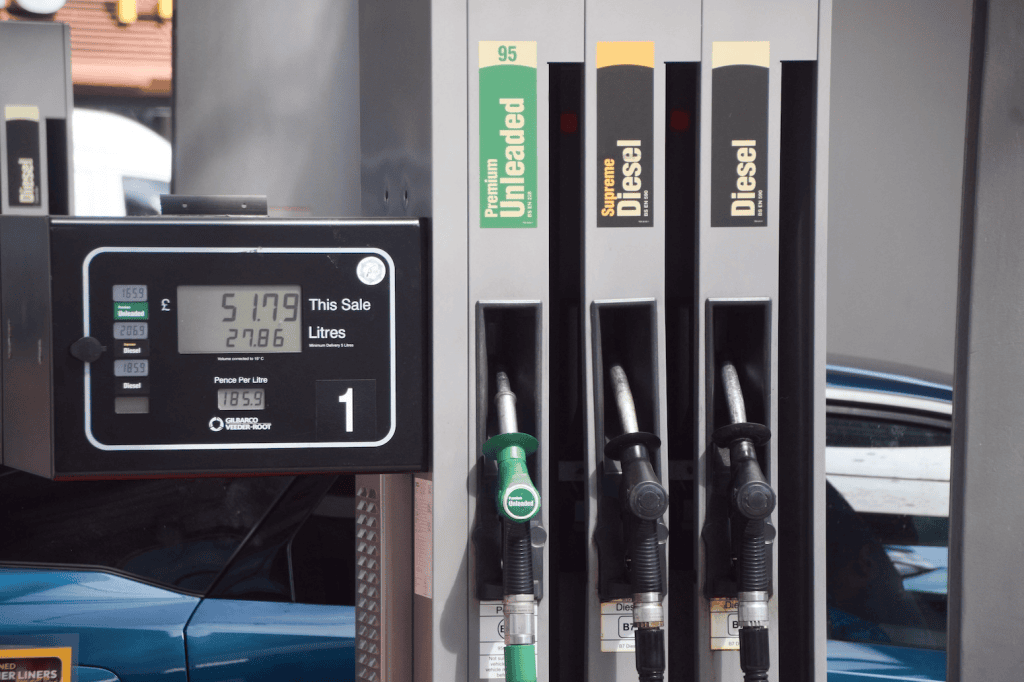
An electric vehicle can now cost up to nine times less per mile to drive than a petrol or diesel car in the UK—but only under the right charging conditions.
With average pump prices above £1.70 per litre for petrol and approaching £2 per litre for diesel in late September 2026, the energy cost of conventional motoring has risen sharply. At the same time, drivers who can charge an EV overnight on a low-cost tariff may pay only a few pence per mile.
The headline difference is striking, but the detail matters. An EV charged cheaply at home and the same EV charged exclusively on premium ultra-rapid infrastructure can have very different running costs. The most useful question is not simply, “Is an EV cheaper?” It is: where and when will you charge?
Why petrol and diesel costs have risen
RAC Fuel Watch figures for 23 September 2026 placed average UK petrol at 173.08p per litre and diesel at 197.31p per litre. At those rates, a theoretical 55-litre fill costs approximately £95.19 for petrol or £108.52 for diesel.
Pump prices move daily and vary between forecourts, so these figures are a dated snapshot rather than a promise of what any driver will pay. They do, however, show why cost per mile has become such an important part of the EV conversation.
Where does “nine times cheaper” come from?
Analysis published by Carbon Brief on 24 September 2026 compared the energy cost per mile of petrol, diesel and electric cars. Its estimates were:
- Diesel: approximately 21p per mile
- Petrol: approximately 20.1p per mile
- EV using standard domestic electricity: approximately 7p per mile
- EV using low-cost off-peak electricity: approximately 2.3p per mile
Comparing 21p with 2.3p produces the “up to nine times cheaper” headline. It is a best-case comparison between current diesel costs and a suitable off-peak home-charging tariff—not a universal saving for every EV driver.
What could that mean over 10,000 miles?
| Vehicle or charging method | Approx. energy cost per mile | Approx. energy cost over 10,000 miles |
|---|---|---|
| EV – low-cost off-peak home charging | 2.3p | £230 |
| EV – standard home electricity | 7p | £700 |
| EV – public charging using HMRC’s benchmark | 15p | £1,500 |
| Petrol | 20.1p | £2,010 |
| Diesel | 21p | £2,100 |
On these assumptions, the difference between petrol and low-cost off-peak EV charging is approximately £1,780 over 10,000 miles. Against diesel, it is approximately £1,870.
These are energy-only comparisons. They exclude the vehicle’s purchase price, finance, depreciation, insurance, tax, servicing, repairs, charging losses and the cost of installing a home charger. Our guide to the cost of charging an electric car in the UK explains how to calculate a full-battery or typical-session cost.
Why home charging can be so inexpensive
Electric cars use stored energy efficiently, but home-charging savings also depend on when that electricity is bought.
For 1 July to 30 September 2026, Ofgem set the average electricity unit rate under the default-tariff price cap at 26.11p per kWh for Direct Debit customers in Great Britain. Some time-of-use tariffs offer much lower rates during defined overnight windows.
For an EV averaging 3.5 miles per kWh, the illustrative calculation is:
- 26.11p/kWh: approximately 7.5p per mile
- 9p/kWh: approximately 2.6p per mile
- 8p/kWh: approximately 2.3p per mile
This is why the charging schedule can matter almost as much as the car. Our guide to smart EV tariffs in 2026 explains overnight charging, eligibility and the need to compare daytime rates, standing charges and full tariff terms.
HMRC’s figures also show the home-charging advantage
From 1 September 2026, HMRC’s advisory electric rates for fully electric company cars are 7p per mile for home charging and 15p per mile for public charging.
The underlying calculation assumes an average EV efficiency of 3.59 miles per kWh, with electricity at 24.47p per kWh at home and 54p per kWh for public charging. These are reimbursement benchmarks rather than a price guarantee, but they independently demonstrate how much charging location can affect running costs.
Public charging changes the comparison
An EV is not automatically nine times cheaper regardless of where it is charged. Public tariffs vary by operator, site, charging speed, membership and payment method. Premium rapid charging can be significantly more expensive per kWh than domestic electricity.
That does not make rapid charging a poor choice. On a long journey, paying more for a shorter stop can offer genuine value. But if a car will be parked for several hours, a lower-powered charger may provide enough energy without paying for speed that is not needed. Read our guide to rapid and ultra-rapid EV charging for a practical explanation of charging power.
Most drivers have a blended charging cost
Real-world EV charging rarely fits one row of a comparison table. A driver might charge at home during the week, use destination charging while shopping and visit an ultra-rapid hub on occasional long journeys.
The result is a blended cost. To estimate yours:
- Review how many kWh you add at home, work and public chargers.
- Multiply the energy used at each location by its price per kWh.
- Add those costs together.
- Divide the total by the miles driven during the same period.
This gives a personal pence-per-mile figure that is much more useful than a single national average.
What if you cannot charge at home?
Drivers with a driveway or dedicated parking space often have access to the lowest charging prices. People living in flats or terraced homes may depend more heavily on public, workplace, kerbside or destination charging.
That does not automatically rule out an EV, but it makes local availability and tariff research essential. Our guide to charging an EV without a driveway covers the practical alternatives.
It also highlights a wider challenge: access to competitively priced charging should not depend entirely on having private off-street parking.
Four ways to keep EV charging costs under control
1. Check the price before connecting
Public tariffs can differ substantially between locations. Review the unit price, any connection or overstay fees and whether the displayed rate requires membership.
2. Match charging speed to your stop
Use rapid or ultra-rapid charging when time matters. If the car will be parked for longer, a suitable lower-powered option may cost less and still add the energy you need.
3. Use off-peak home charging where practical
If you have home charging, compare complete tariff terms and schedule charging during the cheapest eligible window. Remember that a low overnight rate may be paired with a higher daytime price.
4. Plan regular routes
Knowing the reliable and competitively priced chargers near home, work and frequent destinations reduces last-minute dependence on the nearest premium option.
Find and compare public charging with ONEEV
When charging prices and speeds vary, better information supports better decisions. ONEEV helps drivers find participating public charge points, review available tariff and charger details, check supported live availability, navigate to a location and manage compatible charging sessions in one app.
There is no ONEEV subscription required. Compatibility, availability and tariffs vary by charger, so always review the location details before starting a session.
Explore the ONEEV charging app and plan public charging around the journeys you actually make.
Frequently asked questions
Are EVs really nine times cheaper than petrol or diesel?
They can be on energy cost per mile when a low-cost off-peak home tariff is compared with current petrol or diesel prices. The saving is not universal because public charging can cost much more than home electricity.
How much does it cost to drive an EV per mile?
It depends on vehicle efficiency and electricity price. An EV averaging 3.5 miles per kWh costs approximately 2.3p per mile at 8p/kWh and 7.5p per mile at 26.11p/kWh, before charging losses.
Is public EV charging cheaper than petrol?
It can be, but not every tariff is. HMRC’s September 2026 public-charging benchmark is 15p per mile, below the petrol and diesel examples used here. Premium rapid tariffs may produce a similar or higher energy cost per mile.
Do I need a driveway to save money with an EV?
No, but access to home charging usually creates the largest potential saving. Drivers without private parking should compare workplace, destination, kerbside and local public tariffs before deciding.
What should I compare before choosing an EV?
Compare total ownership costs, including purchase or finance, depreciation, insurance, tax, servicing, expected mileage, real-world efficiency and the charging options available on your regular routes.
The bottom line
At late-September 2026 prices, cheap overnight charging can make an EV’s energy cost dramatically lower than petrol or diesel. The “nine times cheaper” figure is achievable under specific assumptions, but it should not be treated as a guarantee.
The practical lesson is simpler: where and when you charge determines how much you can save.
Compare. Charge. Pay. All in ONE app.
ONEEV – Charging Simplified.

