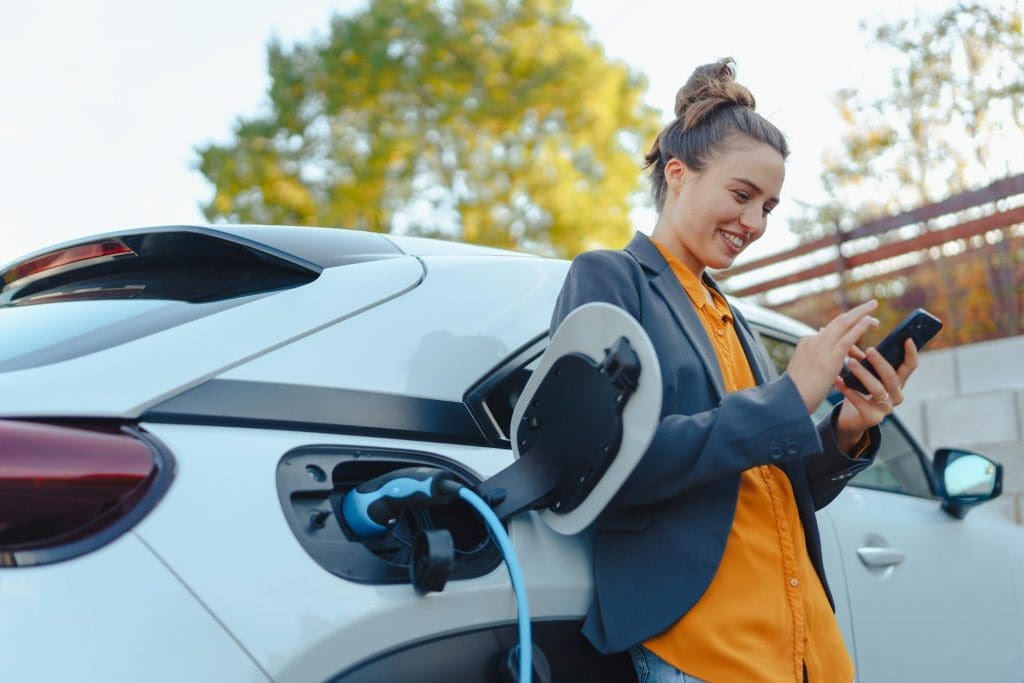
Nearly half of UK households do not have off-street parking. For years, that was one of the biggest reasons people hesitated to switch to electric. If you could not plug in at home, the whole ownership model seemed to fall apart.
In 2026, that assumption is outdated.
Whether you park on a residential street, live in a flat, or do not have access to a private driveway, there are now more practical ways to charge an EV than ever before. This guide walks you through the real options available to UK drivers now, and how ONEEV makes public charging much simpler.
Why the no-driveway problem still matters
It matters because home charging has traditionally been the cheapest and most convenient way to run an EV. Plug in overnight, wake up with a full battery, and pay low overnight rates on a smart tariff. That is still the gold standard for many drivers.
But it has never been the only option. In 2026, the alternatives have become genuinely useful.
Option 1: lamp post charging
Lamp post charging is one of the most established on-street charging solutions in the UK. It uses existing street lighting columns, often taking advantage of spare electrical capacity created when councils switched to LED lighting.
These chargers are typically slower, often around 5kW to 7kW, which makes them best suited to overnight charging rather than quick top-ups.
Key detail: many lamp post chargers require you to bring your own Type 2 charging cable, so check your EV cable setup before your first session.
Option 2: kerbside and pavement channel charging
For drivers who can usually park outside their home, pavement cable channels are becoming a more serious option. These are recessed channels that allow a charging cable to cross the pavement safely without creating a trip hazard.
Providers such as Kerbo Charge and PaveCross offer these installations, with costs often sitting around the hundreds to low thousands depending on the property and local authority position.
One important caveat: a pavement channel does not give you a legal right to the parking space outside your property. If someone else parks there, you will need a backup option.
Option 3: LEVI-funded on-street charging
The Government’s Local Electric Vehicle Infrastructure fund is supporting councils across England with the rollout of more local, residential EV charging.
This matters because on-street charging needs to be planned at neighbourhood level, not just motorway or supermarket level. If your area has received LEVI funding, more kerbside charging may be arriving during 2026 and 2027.
You can check the Government’s LEVI guidance at gov.uk, or contact your local council’s transport team.
Option 4: workplace charging
For many drivers without driveways, workplace charging is the most practical primary option. It turns parked time into charging time and can be an attractive staff benefit for employers.
Businesses can also access Government support through the Workplace Charging Scheme, helping reduce the cost of installing charge points.
If your employer does not currently provide EV charging, it is worth raising. It is increasingly becoming part of the wider employee benefits and sustainability conversation.
Option 5: urban rapid charging hubs
Rapid and ultra-rapid charging hubs are appearing across towns and cities, especially in retail parks, supermarkets and dedicated charging locations.
These are ideal for drivers who do not need to charge overnight every day, but want convenient top-ups while shopping, commuting or running errands.
With the ONEEV app, you can filter for rapid chargers near you, check live availability before you set off, and pay in app without opening another network account.
Option 6: use one public charging app that keeps things simple
One of the biggest improvements for EV drivers in 2026 is the move towards simpler public charging access. Earlier EV drivers often had to manage multiple apps, accounts, cards and payment methods.
ONEEV brings charging into one simpler experience, with live availability, upfront pricing and secure in-app payment through Apple Pay, Google Pay or card.
For drivers without home charging, that simplicity matters. You are not just looking for a charger. You are looking for one that is available, priced clearly and easy to use.
The reality of charging without a driveway in 2026
Not having a driveway is no longer a reason to rule out electric driving. It is a practical planning question, and the answers are improving quickly.
Some drivers will use lamp post charging. Some will rely on workplace charging. Others will mix rapid hubs, kerbside chargers and destination charging. The point is that EV ownership no longer depends on having your own private driveway.
The key is knowing where to charge, whether the charger is available, what it costs, and how to pay without hassle. That is exactly where ONEEV helps.
Find EV charging near you with ONEEV
Download ONEEV to find live EV charging locations across the UK and Ireland, check availability, view pricing and pay securely in app.
Download the ONEEV app or explore EV charging near you.
Frequently asked questions
Can I run an EV in the UK without home charging?
Yes. Many UK drivers charge using public networks, workplace chargers, rapid hubs, lamp post chargers and on-street infrastructure. The key is having a reliable way to find available chargers and pay easily.
What is lamp post charging?
Lamp post charging uses existing street lighting columns that have been converted into EV charge points. They are usually slower chargers and are best suited to overnight charging.
Is it legal to run a charging cable across the pavement?
This depends on your local council. Some councils prohibit or discourage loose cables across pavements because of trip hazards. A properly installed pavement channel is usually the safer and more appropriate solution.
How do I find on-street EV chargers near me?
Use the ONEEV app to search for charge points nearby, check real-time availability, view pricing and pay securely in app.
Will more on-street charging be built in 2026?
Yes. Local authority charging rollout is increasing through Government-backed schemes such as LEVI, with more kerbside and residential charging expected across 2026 and 2027.