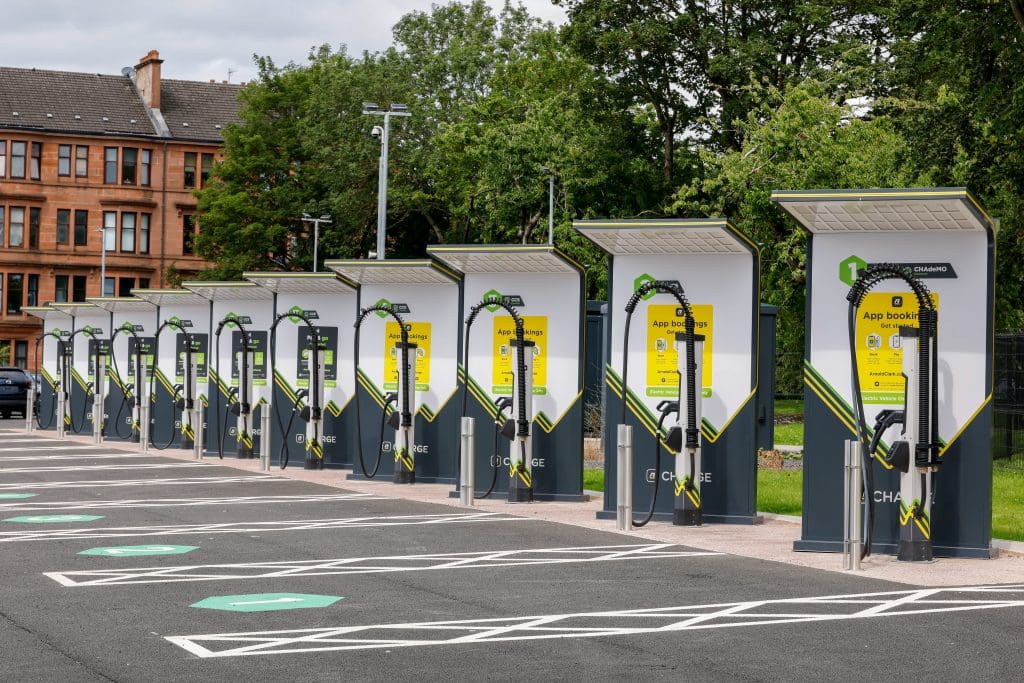
Once upon a time, the loudest criticism of electric cars went something like this. “They’re fine… as long as you’ve got all afternoon.”
Ultra-rapid chargers have politely ended that argument. Not with marketing fluff, but with something far more convincing: minutes, not hours.
What is an ultra-rapid charger, really?
Ignore the acronyms for a moment. An ultra-rapid charger is simply the fast lane of public charging. These are typically DC chargers rated at 100kW+, with many sites offering 150kW, 250kW, and up to 350kW.
In real life, that means you can arrive low, plug in, stretch your legs, and leave with meaningful range before your coffee goes cold. The exact speed depends on your car, battery temperature, and how full the battery already is.
Quick reality check (the bit no one tells you)
- Peak kW is a maximum. Most cars do not hold it for the whole session.
- 10–80% is the sweet spot. Charging slows down as you approach full.
- Preconditioning helps. Many EVs charge faster when the battery is warmed correctly.
This is where EVs grow up
Ultra-rapid charging is not about shaving seconds off lap times. It is about removing stress from long journeys. Motorways, A-roads, unfamiliar towns, and that moment you realise the battery is lower than you thought. Ultra-rapid sites are built for those moments.
The best ones combine speed with reliability and sensible layout. You should not feel like you are charging in a forgotten corner of a car park.
Where you will typically find them
- Motorway services and busy A-road corridors
- Dedicated EV charging hubs and forecourts
- Major retail and travel destinations
- High-throughput commuter routes
What to look for on arrival
- Clear signage and bay markings
- Lighting and space to manoeuvre
- Working screens and connectors
- Multiple units, so a single fault does not ruin your day
Not all cars take the same speed, and that is fine
Some EVs can accept very high DC charging rates. Others are more modest. Either way, ultra-rapid sites still tend to deliver a better experience because they are newer, better maintained, and designed for people who actually need to get moving again.
What about cost?
Ultra-rapid charging often costs more per kWh than slower public charging. That reflects the infrastructure, grid connection, and the sheer power being delivered. On a long journey, paying a bit more to save time and reduce stress is not indulgence. It is common sense.
What drivers will not tolerate is uncertainty. Prices should be clear before you start. Sessions should start cleanly. Payment should just work.
How ONEEV fits into the ultra-rapid experience
Ultra-rapid charging is only “ultra” if the whole experience is simple. ONEEV is built around the fundamentals that matter away from home: finding chargers, checking availability, starting a session cleanly, and paying securely in-app without fuss.
- Choice-first discovery so you can find a charger that suits your stop, not the other way round.
- Less friction so you are not juggling apps when you should be getting back on the road.
- Confidence that the charging part of your journey stays calm and predictable.
Why ultra-rapid chargers matter for EV adoption
Ultra-rapid chargers remove one of the final psychological barriers to EV ownership. They prove that electric driving is not just for commuting and local errands, but fully capable of replacing petrol and diesel for long-distance travel as well.
Once you have used a properly executed ultra-rapid charge, waiting around for a sluggish, temperamental public charger feels about as appealing as winding up a window by hand.
Helpful links and references
For readers who want the deeper detail behind the headline speeds, these sources explain ultra-rapid charging ratings and real-world factors.