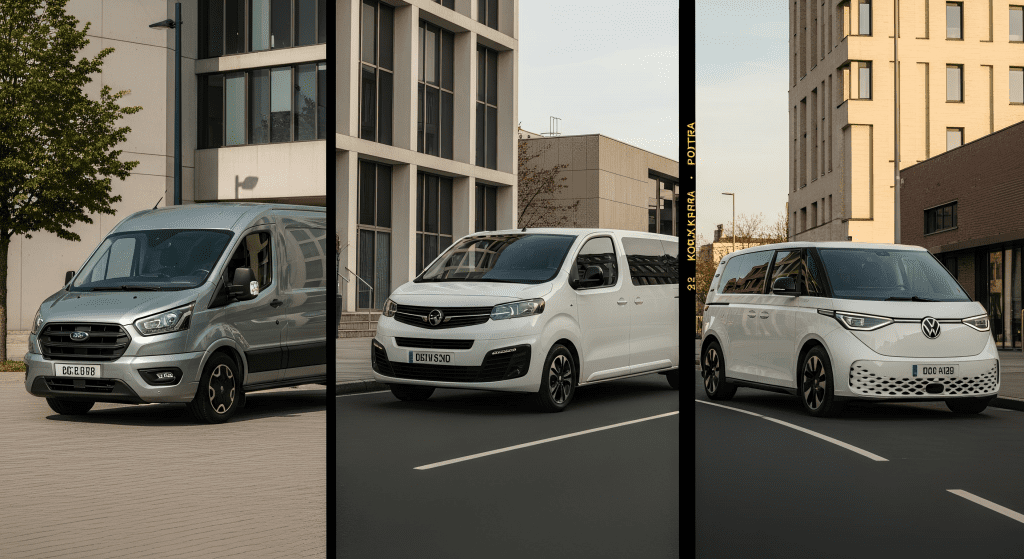
For decades, the diesel white van has been the backbone of the economy. It has carried tools, stock, parcels, and livelihoods through city centres and rural routes alike. But in 2026, something is changing fast.
Walk through major towns and cities and you will notice it. Less diesel rattle, more quiet electric hum. This is the “White Van Revolution”, and it is being driven by a mix of policy, incentives, and simple business maths.
If you run a small business, are self-employed, or operate company car drivers who use a van day-to-day, this is the year the numbers have started to stack up properly.
Related reading: If you are also thinking about charging confidence on the road, explore EV Charging Near Me and the latest tips in ONEEV Insights.
Why 2026 Is a Turning Point
The UK’s Zero Emission Vehicle targets for vans rise year by year, and 2026 is a notable step change. This is one reason manufacturers are pushing hard with sharper pricing, improved availability, and better finance packages to help shift more electric vans into real-world use.
If you want the policy detail, the government sets ZEV targets within the Vehicle Emissions Trading Schemes. You can read the official overview here: ZEV targets (GOV.UK).
1) The Big Tax Advantage: 100 Percent First-Year Allowances
This is one of the strongest reasons electric vans have become a genuine business decision rather than an “eventually” project.
In the UK, many businesses can claim 100 percent First-Year Allowances on qualifying expenditure for new electric vans and charging infrastructure, allowing the cost to be deducted from taxable profits in the year of purchase.
Why it matters: this can materially improve cash flow and shorten the payback period, especially for SMEs where margins are tight and certainty matters.
2) Van Benefit Charge: The Zero-Emission 0 Rate Advantage
If a company van is available for significant private use, there is normally a flat-rate Van Benefit Charge that applies.
For zero-emission vans, the benefit charge remains set at £0. That is a meaningful advantage for directors and employees, effectively improving take-home value without adding wage cost.
To understand how the standard van benefit charge is uprated, see HMRC’s published rates for upcoming tax years: Van benefit charge uprating (GOV.UK).
3) Grants That Reduce Upfront Cost
Direct support remains one of the most practical accelerators for SMEs, because it tackles the single biggest barrier: purchase price.
United Kingdom: Plug-in Van Grant
The Plug-in Van Grant provides a discount on eligible new electric vans. Details and eligibility are listed on GOV.UK: Plug-in Van Grant (GOV.UK).
Ireland: SEAI support for businesses
Irish SMEs can access SEAI supports for electric vans, with grant amounts based on vehicle category. The latest information is here: EV grants and supports for business (SEAI).
4) Running Costs: Diesel Versus Electricity
By 2026, the running cost argument is one of the clearest wins for electric vans, particularly for urban and regional routes.
- Energy cost stability: electricity pricing can be planned and optimised far more predictably than diesel.
- Lower maintenance burden: fewer moving parts typically means fewer routine service items and less downtime.
- Workplace charging impact: charging where you operate turns “refuelling time” into a simple operational process.
ONEEV practical angle: if your drivers also need public charging confidence, ONEEV supports charging that is designed to be simple and secure. Start with our guide: How to find EV charging stations near you.
5) Future-Proofing: Clean Air Zones and Access Costs
Access restrictions and clean air charging are no longer “big city only” issues. They can influence contracts, route planning, and total cost of operation.
London’s Ultra Low Emission Zone applies a daily charge for vehicles that do not meet emissions standards. The current charge is confirmed by Transport for London here: ULEZ daily charge (TfL).
For SMEs, an electric van removes this variable entirely and helps ensure you can service customers across zones without cost surprises.
Top Electric Van Picks for SMEs in 2026
- Ford E-Transit
A popular choice for payload confidence and familiarity for existing Transit drivers. - Vauxhall Vivaro Electric
A practical balance of range, cost, and day-to-day usability for multi-stop work. - Volkswagen ID. Buzz Cargo
Ideal for customer-facing brands that want the van to double as a moving statement of modernity.
If you are building a wider EV journey for your business, you may also want to strengthen driver confidence around secure payment and avoiding common charging pitfalls: EV charging payment safety.
FAQs
Are electric vans actually cheaper to run than diesel in 2026?
For many SME use cases, yes. Electricity can be cheaper per mile than diesel, and maintenance demands are often lower. The biggest savings usually come when you can charge at your premises or at predictable locations.
Do electric vans still qualify for grants?
Yes, grant schemes remain available, but eligibility rules can change. Always check the latest criteria directly with the scheme owners before ordering.
Is the van benefit charge still £0 for zero-emission vans?
Yes, the zero-emission van benefit charge has remained set at £0 in recent tax years. Standard van benefit charges continue to be uprated for vans that can emit CO2.
Will an electric van help with Clean Air Zone costs?
In many cases, yes. Electric vans are typically exempt from daily charges applied to non-compliant vehicles in emissions zones, reducing route costs and bidding risk for urban contracts.
How can drivers find reliable charging when they are working on the road?
Using a charging app that shows availability and supports simple in-app payment reduces wasted detours and downtime. Start with: the best EV apps guide.