Reporting from Westminster and the charging forecourts of Britain
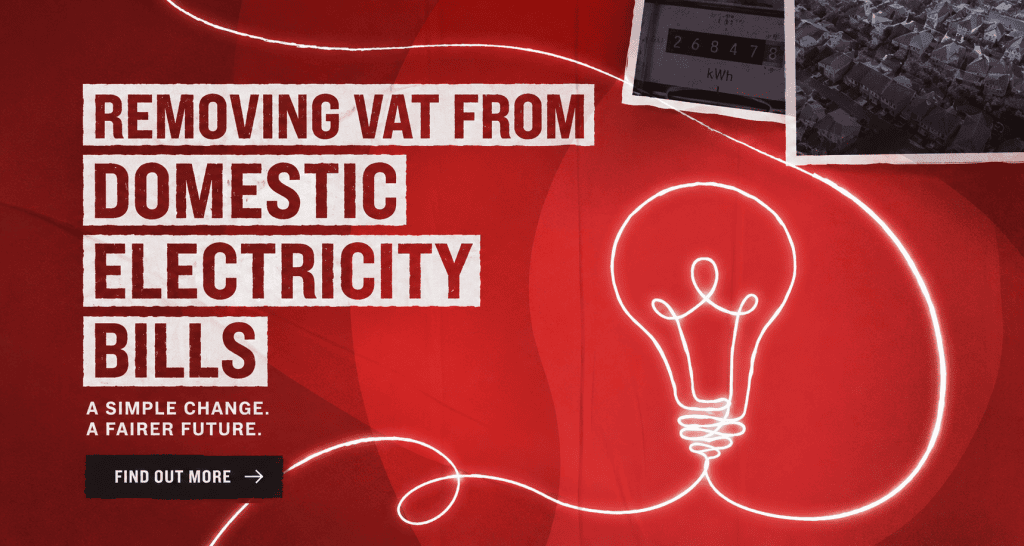
I’m standing outside a row of terraced houses in South Wales, watching a driver plug in her electric car for the night. It’s an ordinary scene that, from October, is about to get a little cheaper. This week, in one of his first major policy moves since taking office, new Prime Minister Andy Burnham announced that VAT on domestic electricity bills will be scrapped entirely, dropping from 5% to 0% from 1 October 2026.
For millions of households across the country, that translates into real money back in their pockets. The government estimates the average household will save around £45 a year once the change lands, with the savings funded by scrapping the previous government’s proposed digital ID scheme rather than new borrowing.
What Burnham Announced
Speaking after the announcement, Burnham was blunt about his reasoning. He said Westminster had stopped working for ordinary people, with families struggling under the weight of rising bills, and that something had to change. His message was one of urgency: immediate tax relief on energy, more money in people’s hands, and a signal that his government intends to move fast on cost of living issues.
The mechanics are straightforward. Electricity suppliers will be required to strip the VAT out of bills from the start of October, in time for the next Ofgem price cap announcement, expected on 26 August. Assuming suppliers pass the saving on in full, typical bills should fall by close to 4.8%, slightly under the headline 5% because VAT is calculated on the pre tax price.
Good News for the Driveway Owner, Less So for Everyone Else
For electric vehicle drivers who charge overnight on their own driveway, the change is a welcome one. Based on current capped rates, filling a 100kWh battery from empty could fall from around £26.11 to roughly £24.87, a saving of about £1.24 per full charge. Do that once a week and it adds up to somewhere around £65 a year, more for households running two electric cars or covering serious mileage.
The Electric Vehicle Association welcomed the move, calling it good news for households up and down the country and noting that it makes home charging, already one of the cheapest ways to run a car in Britain, even more affordable.
But walk the story forward a little and the cracks start to show. This VAT cut applies only to domestic supply. It does nothing for the millions of drivers who rely on public charge points because they don’t have a driveway or off street parking. Public charging remains subject to the standard 20% VAT rate, compared to the reduced rate enjoyed at home, a gap that industry figures have been vocal about for some time.
Vicky Edmonds, chief executive of EVA England, put it plainly: households will feel real relief, but drivers stuck relying on public infrastructure will barely notice the difference, simply because of where they happen to park their car. She’s calling on the government’s ongoing Cost of Public Charging Review to deliver structural change, not just a headline saving for those lucky enough to charge at home.
A Wider Tax Picture Still Taking Shape
This announcement doesn’t exist in isolation. It follows a tribunal ruling earlier this year that found individual public charging use could, in some circumstances, qualify for the lower 5% domestic rate rather than the standard 20%, a decision HMRC is understood to be appealing given the potential cost to the Treasury. Separately, officials have been exploring whether to bring public charging VAT down to 5% permanently, partly to soften the blow of the pay per mile road charging scheme due to arrive in 2028.
Add in last year’s removal of Vehicle Excise Duty exemption for electric cars, and it’s clear the tax landscape around EV ownership is shifting on several fronts at once, some in drivers’ favour, others less so.
On the Ground
Back on that street in South Wales, the driver I spoke to shrugged when I mentioned the announcement. A few pounds off her charging bill is welcome, she said, but what she really wants is cheaper charging when she’s out and about, not just at home. It’s a sentiment echoed by campaigners and industry leaders alike: this VAT cut is a genuine, tangible saving for those who can charge at home, but it leaves the bigger question of fairness for public charging users largely unanswered.
For now, households can look forward to lower bills from October. Whether the public charging gap narrows anytime soon remains very much a story still being written.
All figures and policy details reported here reflect information available as of 21 July 2026 and are subject to change as further details are confirmed.