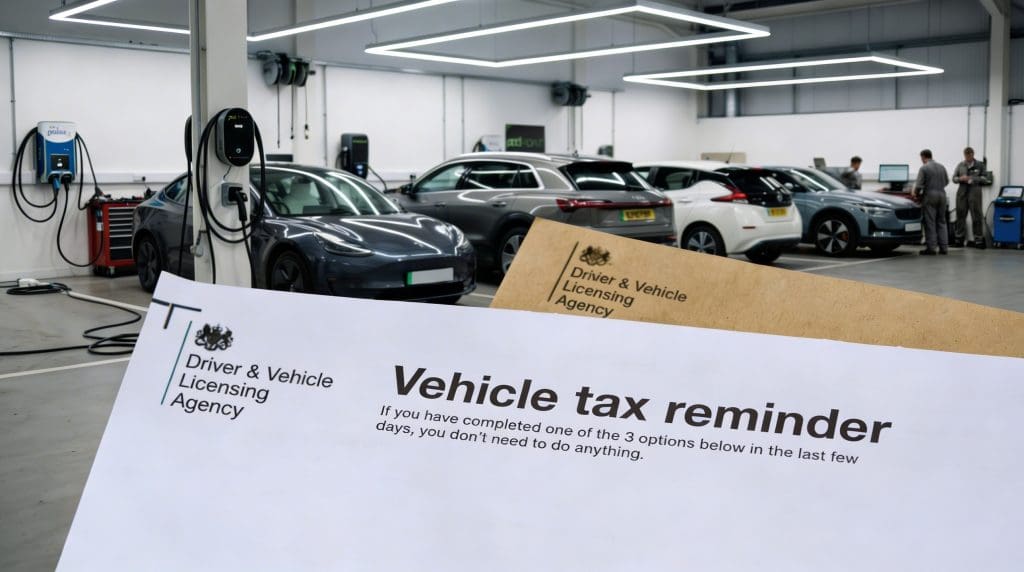
The 2026 Guide to Electric Car Tax: What’s Changing in April?
If you own an electric car, or you are thinking about switching in 2026, April marks a real turning point for drivers across the UK. The era of zero road tax for EVs has ended, but the latest update to the Expensive Car Supplement brings some unexpectedly good news. In plain English, some EV owners will pay more than before, but many buyers of mid-range and premium electric cars could now avoid a painful extra tax bill altogether.
In short: from 1 April 2026, most EVs move onto standard annual Vehicle Excise Duty, but the so-called luxury car threshold for zero-emission cars rises from £40,000 to £50,000.
That means plenty of electric cars which previously looked exposed to the expensive car supplement may now sit outside it entirely.
1. The New £50,000 “Luxury Tax” Threshold for EVs
One of the biggest electric car tax changes in April 2026 is the update to the Expensive Car Supplement, often referred to as the luxury car tax. Previously, EVs were dragged into the same £40,000 threshold that caught many mainstream premium models. That created a problem because a large number of family-sized electric cars naturally sit above that level thanks to battery costs.
From 1 April 2026, the threshold for zero-emission cars only rises to £50,000. This applies to zero-emission cars registered from 1 April 2025 onwards, where the licence taking effect is on or after 1 April 2026 and is not the first vehicle licence.
What this means for you: if your EV has a list price between £40,001 and £50,000, it can now avoid the Expensive Car Supplement completely, provided it falls within the qualifying dates.
The supplement itself is also higher than many older articles still suggest. For 2026 to 2027, the Expensive Car Supplement is £440 per year, charged in years two to six on qualifying cars. That means avoiding it can save a driver £2,200 over five years.
This is especially relevant if you are looking at better-specced electric cars that edge into premium territory but are not truly “luxury” in the traditional sense. In real-world buying terms, this threshold change gives buyers more breathing room and makes several popular EVs materially better value than they looked just a year ago.
2. Standard VED Rates for Electric Cars in 2026/27
The other big change is that EVs are now firmly inside the UK’s Vehicle Excise Duty system. That means most electric car owners will no longer see a £0 renewal reminder.
| Electric car registration date | 2026/27 tax position |
|---|---|
| On or after 1 April 2025 | £10 first-year rate, then £200 standard annual rate from the second licence onwards |
| Between 1 April 2017 and 31 March 2025 | £200 standard annual rate |
| Between 1 March 2001 and 31 March 2017 | £20 annual rate |
So, while many people still search for “zero road tax electric cars”, the reality in 2026 is different. Most battery-electric cars now carry a yearly tax cost. It is not enormous compared with the overall running cost of a car, but it is no longer something drivers can ignore when working out ownership costs.
Important distinction: the £10 rate is a first-year rate for qualifying new zero-emission cars registered on or after 1 April 2025. It is not limited only to cars first registered in calendar year 2026.
3. The Electric Car Grant in 2026
There is still help available on the purchase side. The UK’s Electric Car Grant continues in 2026 for eligible new electric cars priced at or below £37,000. The grant is now tiered based on sustainability criteria linked to how the vehicle is built.
| Grant band | Maximum amount | What it means |
|---|---|---|
| Band 1 | £3,750 | For the greenest eligible vehicles meeting the stricter sustainability criteria |
| Band 2 | £1,500 | For other eligible EVs that meet the scheme rules but not the top band criteria |
The grant is applied by the seller as a discount, so it is designed to reduce the upfront price rather than operate as a rebate later. For buyers watching monthly payments, deposit levels, or total cost of ownership, this matters.
It also means the 2026 market is more nuanced than simple headlines suggest. Yes, EV taxation is now real. But equally, there is still direct government support available for qualifying lower-cost electric cars, which can soften the blow for buyers entering the market.
4. Why 2026 Still Looks Strong for Used EV Buyers
If the new tax landscape has you hesitating over a brand-new electric car, the used market remains one of the most interesting parts of the story. The wider transition to electric, alongside manufacturer pressure under the ZEV mandate, continues to expand the second-hand EV pool.
The 2026 target built into the ZEV policy framework is 33% for new car sales, and that keeps pressure on brands to push more electric stock into the market. Over time, that supports the flow of nearly-new and ex-lease EVs into used listings.
Used EV buying rule for 2026: stop obsessing only over mileage and start asking about battery state of health.
Battery health checks are becoming one of the clearest trust signals in the used EV market. Industry data shows that buyers care increasingly about state-of-health reporting, while broader battery analysis has found average battery state of health remains far stronger than many sceptics assume.
In other words, the used EV opportunity is less about blindly chasing the cheapest car and more about finding the right car with transparent battery information, sensible warranty cover, and charging that fits your routine.
For more on running costs and broader EV ownership economics, see The True Cost of an EV in the UK: A 2025 Breakdown and 5 EV Myths Debunked: The Real Facts for UK Buyers.
5. Charging Costs Still Matter More Than Road Tax for Most Drivers
Although annual tax has gone up for EV owners, the bigger financial picture still usually comes down to energy costs. For drivers able to charge at home on a dedicated EV tariff, electric motoring can remain dramatically cheaper per mile than petrol or diesel.
Public charging is more variable, of course, and rapid charging can narrow the gap if used heavily. That is exactly why planning, tariff awareness, and easy payment matter so much more in 2026. Saving time, avoiding unreliable stops, and choosing the right charger first time can have just as much impact on the ownership experience as the tax itself.
If you want simpler public charging and secure in-app payment across a growing network, explore the latest updates in ONEEV Insights and related EV guidance on the site.
6. What About Pay-Per-Mile EV Tax?
It is worth watching the government’s proposed electric Vehicle Excise Duty consultation, often shortened to eVED. The consultation sets out a possible mileage-based charge for EVs and plug-in hybrids from April 2028. For electric cars, the consultation uses a proposed rate of 3p per mile.
The key point is this: it is not a live tax in April 2026. It remains a policy proposal under consultation. So while it is sensible to keep an eye on it, buyers should not confuse future proposals with today’s rules.
2026 reality check: the taxes affecting EV drivers right now are the new VED structure and, for some buyers, the Expensive Car Supplement. The mileage-based system is still future-facing.
Final Verdict: Is Switching to an EV Still Worth It in 2026?
Yes, but with clearer eyes and better maths.
April 2026 is a real shift because electric cars are no longer sitting in a special tax-free bubble. However, the picture is not simply “EVs cost more now”. The increase of the expensive car threshold from £40,000 to £50,000 is a meaningful win for many buyers, and the Electric Car Grant still gives eligible lower-cost models a push in the right direction.
For drivers comparing the full ownership picture, the smart question is no longer just “Do EVs pay road tax now?” It is this: which EV gives me the best balance of purchase price, tax exposure, charging cost, and long-term running value?
Get that answer right, and 2026 can still be an excellent time to go electric.
FAQs
Do electric cars pay road tax in 2026?
Yes. Most electric cars now pay Vehicle Excise Duty. In 2026 to 2027, the standard annual rate is £200 for most EVs, while some older electric cars pay £20.
What is the luxury car tax threshold for EVs in 2026?
From 1 April 2026, the Expensive Car Supplement threshold for qualifying zero-emission cars rises to £50,000, up from £40,000.
How much is the expensive car supplement in 2026?
For 2026 to 2027, the Expensive Car Supplement is £440 per year in years two to six for qualifying cars above the threshold.
Can I still get a grant for a new electric car in 2026?
Yes. Eligible new EVs priced at or below £37,000 may qualify for the Electric Car Grant, with discounts of up to £3,750 depending on sustainability banding.
Is pay-per-mile EV tax active in 2026?
No. A mileage-based electric vehicle duty is being consulted on for April 2028, but it is not a live tax in April 2026.
Looking beyond tax? EV ownership is about more than what you pay the DVLA once a year. It is also about how easily you can find, start, and pay for charging when you are out on the road. That is where a smoother charging experience can make all the difference.
References
GOV.UK: Vehicle tax for electric, zero and low emission vehicles
GOV.UK: Annex A rates and allowances for 2026 to 2027
GOV.UK: Electric Car Grant subsidy scheme overview
GOV.UK: Consultation on the introduction of electric vehicle excise duty (eVED)
Auto Trader: Used car market enters 2026 with positive momentum
Auto Trader: Battery health information and used EV retailing