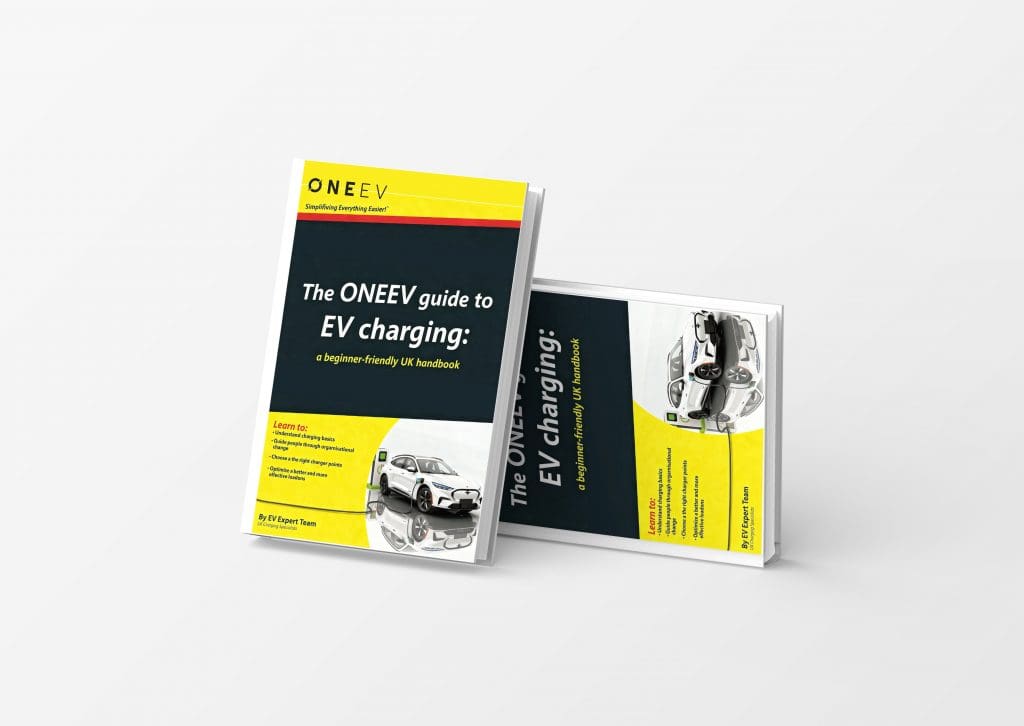
EV charging should feel like a normal part of driving, not a test of patience. This guide gives you the practical basics: where you can charge, what charger speeds actually mean, how payment works in the UK, and the habits that make charging calmer and cheaper over time.
Quick tips to get started (without overthinking it)
Aim for 20–80% Choose the right speed Have a Plan B charger Pay securely- Start locally first. Do your first public charge somewhere familiar so you learn the flow without time pressure.
- Do not chase 100% every time. For most journeys, charging to around 80% is quicker and more efficient.
- Match charger speed to stop length. If you are shopping for an hour, you need a different charger than if you are doing a 15-minute motorway stop.
- Keep a simple backup. If your first site is busy or out of service, knowing your second option avoids stress.
- Use one app to stay organised. Your history, receipts, and session tracking are easier when your charging life is not scattered across multiple places.
If you want the simplest step-by-step, use this companion guide: How to charge your EV in 4 easy steps with the ONEEV app.
Where do I start with EV charging?
If you can charge at home, that will usually be your easiest baseline. If you cannot, you can still run an EV confidently by using local public charging for regular top-ups and faster hubs for longer trips.
Your first five practical steps
- Decide your “everyday charge plan”. Home, workplace, supermarket, gym, on-street near your home, or a mix.
- Learn your connector type. Most UK EVs use Type 2 for AC and CCS for rapid DC, but it is worth confirming once.
- Practise one public session near home. A calm first experience makes everything else easier.
- Work out your typical stop length. That single habit helps you choose the right speed (and cost) every time.
- Use ONEEV to keep it simple. Find chargers, check key details, and pay in-app where supported.
Where can I charge an electric car in the UK?
You will see chargers in far more places than you expect: supermarkets, retail parks, hotels, leisure centres, car parks, on-street bays, and dedicated charging hubs. For longer journeys, motorway services and major A-road corridors are where rapid and ultra-rapid charging matters most.
En-route charging
Best for longer journeys when you want speed and a short stop.
Destination charging
Best when you will be parked for a while, such as shopping, work, or a hotel stay.
On-street charging
Best for drivers without off-street parking who need a local routine option.
Home and workplace
Often the most convenient and cost-effective, especially with off-peak tariffs.
Official UK statistics reported 86,021 public charging devices as of 1 October 2025. Read the latest GOV.UK quarterly report. :contentReference[oaicite:0]{index=0}
Charging speeds explained (kW) and what they mean in real life
Charger speed is shown in kilowatts (kW). Higher kW can add range faster, but your car also has a maximum charge rate, and the charging curve slows as the battery fills. That is why the 20–80% window is such a useful habit.
A simple way to think about it
- 3–7 kW: best for overnight or long stays.
- 7–22 kW: best for longer destination stops and regular top-ups.
- 50 kW+: rapid charging for road trips and quicker stops.
- 150–350 kW: ultra-rapid charging where your car supports it, ideal for motorway travel.
For a deeper, driver-friendly explainer (including battery health and smart stop planning): Rapid and ultra-fast EV charging explained.
Connector types: what you need to know once, then forget
Most UK EVs now follow a simpler standard than the early days. AC charging is typically Type 2. Rapid DC charging is typically CCS. A smaller number of vehicles, especially older models, may use Type 1 or CHAdeMO.
Keep this bookmarked for quick confidence: Guide to EV charger socket types in the UK.
Best practice: how to charge with less stress (and better results)
Charging is usually straightforward, but a few habits make it feel dramatically easier. These tips are practical, not preachy, and they work for almost every EV.
- Top up before you are low. Keeping a buffer means you are choosing chargers, not being forced into them.
- Stop at around 80% on rapid chargers. Charging often slows down after that point, so you can spend longer for less gain.
- Use preconditioning if your car supports it. A warm battery can charge faster, especially in colder weather.
- Choose charging around your life. Shopping, the gym, and a coffee break are your most painless “charging moments”.
- Think off-peak at home. Smart charging helps shift demand and can be cheaper when your tariff supports it.
If you want the “why” behind smart charging, this is a good primer: NESO on smart charging. :contentReference[oaicite:1]{index=1}
How to find EV chargers with ONEEV
The most reliable way to find a charger that suits your stop is to start with what you need, then narrow it down. With ONEEV, you can search near you or near a destination, then filter to match charger speed, connector compatibility, and the sort of stop you are making.
A quick routine that works
- Search near you or where you are heading.
- Filter by speed and connector so you only see realistic options.
- Open a location to check the essentials before you drive there.
- Keep a backup location in mind if your first choice is busy.
More detail here: How to find EV charging stations near you in the UK.
How do I pay for EV charging in the UK?
Payment depends on the charge point operator and the charger type. Increasingly, rapid and ultra-rapid sites offer contactless card payments, while many networks also offer app-based methods. ONEEV helps keep charging more organised by supporting secure in-app payment where available, so you can manage sessions and receipts in one place.
Secure ways to pay
- In-app payment Is the most secure method, with start control and session tracking.
- WARNING For your security, we generally recommend using in-app payment instead of RFID cards or contactless, as these methods can be more exposed to fraudulent activity..
ONEEV payment help and pre-authorisation details: ONEEV Support.
How much does EV charging cost?
Costs vary based on where you charge, the time of day, and the speed of the charger. Home charging is often cheaper when you can use off-peak tariffs, while rapid public charging is priced for convenience and speed. The important thing is understanding the trade-off so you are choosing intentionally rather than guessing.
For a clear comparison (home vs public, plus the real-world factors people miss): The real cost of charging an electric car in the UK.
Next steps
If you are new to EV charging, the best move is a simple one: do your first public session locally, then build a routine that fits your weekly life. Once that routine is in place, long journeys become far easier because you already trust the process.
- Download ONEEV and set up your payment method.
- Use the four-step walkthrough: Search, find, select, start.
- Bookmark connectors: Type 2, CCS, CHAdeMO explained.
Want a location-led starting point? Explore: EV charging near me.