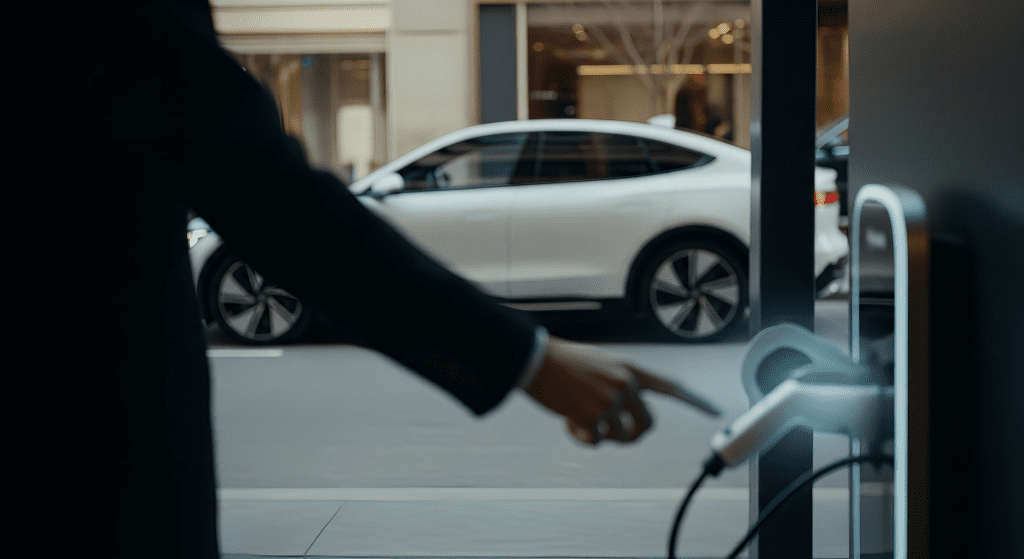
Contactless payment at EV chargers is meant to be the end of friction. No accounts, no apps, no logins. Just tap your card and get on with your day. In practice, it is often the start of something else entirely: higher prices, inconsistent experiences, and a quiet shift in how networks want you to pay.
This is not a conspiracy. It is a commercial reality. Card payments cost money to process, physical readers need maintenance, and charge point operators have to manage fraud risk, consumer disputes, and compliance. The easiest payment method for drivers is not always the cheapest or simplest method for the operator.
Why “Tap and Go” Often Costs More
On many networks, the contactless price is higher than the in-app price. That gap exists for three practical reasons.
- Processing costs and chargebacks: Card payments introduce interchange fees, payment gateway charges, and a higher likelihood of disputes, all of which are real operating costs.
- Hardware complexity: Card readers are exposed to weather and heavy use. They break, they require certification, and they add another point of failure on site.
- Price signalling: Operators can use contactless as an “ad-hoc” option while steering frequent drivers towards app-based pricing, bundles, or membership rates.
None of that is inherently wrong. It is simply how pricing works when convenience becomes a premium product.
The Rules Are Pushing One Thing, Economics Another
The UK has introduced requirements around contactless payment at public charge points, with detailed guidance on when and where it must be offered. These rules aim to make public charging more accessible, particularly for drivers who do not want another account or subscription. The guidance for the Public Charge Point Regulations is explicit about contactless expectations at certain power levels and timelines.
Separately, in the EU, the Alternative Fuels Infrastructure Regulation (AFIR) includes requirements designed to support “ad-hoc” payment methods and price transparency at public charging, including card payment expectations for certain newly installed sites, with further requirements extending to older sites over time.
The direction of travel is clear: drivers should be able to pay without pre-registering. The challenge is that compliance does not automatically deliver a consistent price, and it does not remove the operator’s cost base.
Why Apps Are Still Becoming the Default
Even with contactless availability, apps solve problems that card readers cannot. They let networks authenticate the driver, present transparent pricing before you start, send digital receipts, manage idle fees, and handle support workflows with clearer evidence.
From a driver’s perspective, the app route can also mean more predictable pricing and fewer surprises. This is exactly why many drivers prefer using a single charging app that can access multiple networks. For example, using the ONEEV app to start sessions where supported keeps the experience consistent: find, start, and pay securely in one place.
The point is not that contactless will vanish overnight. It is that contactless is increasingly treated as the safety net, while digital authorisation becomes the primary channel for regular drivers.
What This Means for Drivers in 2026
- Expect price differences: If you always pay contactless, you may be consistently choosing the most expensive tariff on that network.
- Prioritise price clarity: Check the displayed tariff and units before you start. Regulators are pushing transparency, but the experience varies by site.
- Have a reliable backup: Contactless is excellent when it works. A trusted app is excellent when you need a predictable session flow and support trail.
Convenience is useful. It is just not always cheap. The smartest approach is to treat contactless as the quick exit route, not the only route.
Frequently Asked Questions
Is contactless required at UK public charge points?
The UK’s Public Charge Point Regulations set out where contactless must be available and the timelines for compliance, including requirements for certain power ratings and deployments. See the official guidance for specifics.
Does contactless always cost more?
Not always, but it is common to see a higher ad-hoc rate compared with in-app rates or membership pricing, because the operator’s costs and commercial incentives differ by payment method.
Should I use an app instead?
Many drivers use a mix. Contactless is useful for emergencies and simplicity. Apps can deliver better price visibility, receipts, support evidence, and consistency across networks.