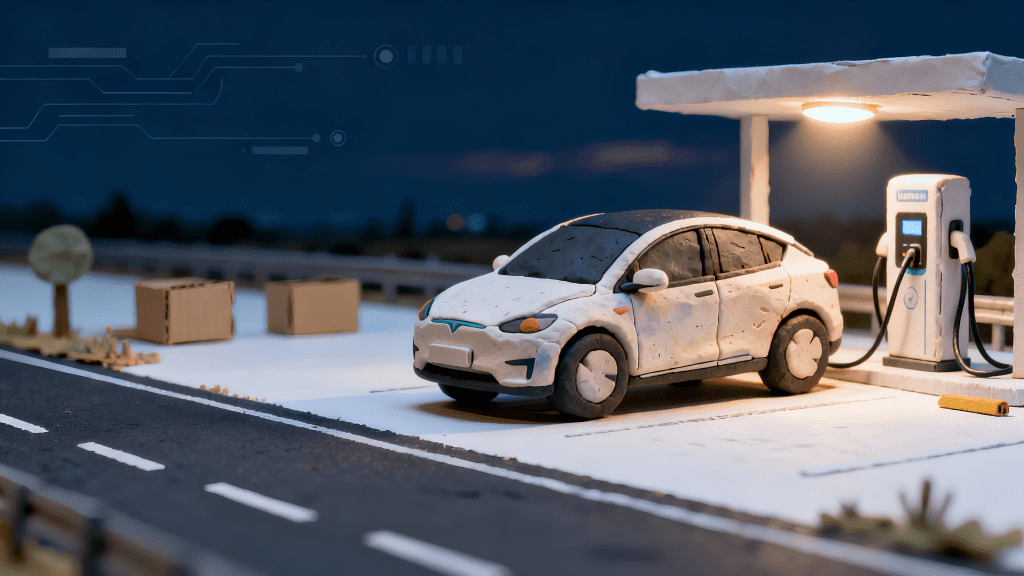
For years, EV range anxiety was the number one reason drivers hesitated to go electric. In 2025, something changed. The fear is fading, not because people stopped caring, but because the real world finally caught up with the myth.
Research cited from Plug In America shows that persistent range anxiety is reported by 48% of buyers before purchase, yet it drops to around 22% after ownership. That gap is the story of 2025: once drivers experience EV life properly, the worry shrinks fast. (Source reference used in industry coverage: InsideEVs summary citing Plug In America.)
Quick answer: Is EV range anxiety still a real problem in 2025?
For most drivers, not for long. In 2025, EVs typically offer far more usable daily range than people need, and public charging is denser than ever. The remaining anxiety is usually “charging anxiety”, meaning concerns about reliability, availability, and payment simplicity at public chargers.
The fix is straightforward: start most days charged at home, use live availability and route planning on longer trips, and rely on ultra-rapid hubs for quick top-ups when travelling.
What is EV range anxiety?
EV range anxiety is the fear that your battery will not last long enough to reach your destination, or that you will not be able to charge when you need to. It is less about technology and more about uncertainty, especially when you are new to electric driving.
In 2025, many drivers experience a newer version of the same worry: charging anxiety. Chargers may exist, but drivers want to know three things before they commit: will it work, will it be available, and will payment be painless?
The reality of real-world EV range in 2025
The average range most people associate with EVs is outdated. Across the market, real-world capability has improved sharply since 2020, and by 2025 it is common to see vehicles with official ranges around the 300-mile mark and beyond. As a simple rule, many drivers only “need” a fraction of that on a normal week.
Why the perception lags behind reality
- Petrol habits trained us to refuel only when the tank is low, so “battery percentage” feels unfamiliar at first.
- Early EV models had shorter ranges and slower charging, and that memory sticks in the public mind.
- People overestimate how often they drive long distances, and underestimate how often a car is parked.
A useful mental model for drivers
- Daily driving: charging is mostly about routine, not planning.
- Long trips: charging is about timing and location, not “will I make it”.
- Confidence: comes from live data and a simple payment experience.
What affects range and how to manage it
Even in 2025, range is not a fixed number. It responds to conditions. The good news is that most range losses are predictable and manageable once you know what causes them.
Range variables that matter most
| Factor | What happens | What to do |
|---|---|---|
| Cold weather | Battery efficiency can drop in winter, particularly on short trips with cabin heating. | Pre-heat the cabin while plugged in, use seat heating, and plan an extra buffer on motorway trips. |
| High speed | Aerodynamic drag rises quickly at motorway speeds, increasing consumption. | Drive smoothly, consider 65–70 mph for better efficiency, and let route planning set the pace. |
| Tyre pressure | Under-inflated tyres increase rolling resistance and reduce efficiency. | Check tyre pressure monthly, especially in winter, and keep to manufacturer recommendations. |
| Elevation and wind | Hills and headwinds increase energy use, sometimes more than drivers expect. | Use route planning that accounts for elevation and conditions rather than guessing. |
The key takeaway: range variation is not random. If you plan with a small buffer and rely on live charging information, it stops being stressful.
Three proven solutions to overcome range anxiety
1) The “Wake Up Full” strategy
The simplest cure is home charging. If you start the day with a healthy charge, most journeys become effortless. For many households, public charging becomes an occasional travel tool rather than a daily dependency.
Smart home charging can also reduce costs by shifting charging to off-peak times. This turns EV ownership into a routine: you plug in when you get home and wake up ready to go.
2) AI-powered route planning and live availability
In 2025, drivers do not need to gamble on a charger being free. Route planning and live availability are what separate a confident EV journey from a stressful one. The best journeys are the ones where charging is planned as a simple stop, not a surprise.
For longer routes, look for planning that accounts for real-world conditions like elevation, speed, and weather. When your estimated battery on arrival is informed, range anxiety tends to vanish.
3) The 15-minute “pit stop” mindset
Ultra-rapid charging hubs have changed the game. The point is not to charge to 100% at every stop. The point is to add enough range quickly, like a pit stop, then continue.
The UK’s public charging footprint has grown significantly, with industry reporting placing the total at more than 87,000 charge points by late 2025. (Reference: RAC UK charging statistics.) More importantly, ultra-rapid devices grew strongly through 2025, supporting faster travel charging.
Is range anxiety still justified?
If you are brand new to EVs, a little anxiety is normal. It is a learning curve, not a permanent state. Most new owners find that once they have done two or three longer journeys, the fear collapses into a practical routine.
The mindset shift is simple: you stop thinking about “refuelling” and start thinking about “topping up”. Your car spends hours parked at home, at work, or while you are shopping. Charging is something that happens while life happens.
Range anxiety checklist
- Keep a small buffer for winter motorway journeys and strong headwinds.
- Charge at home when possible and treat public charging as your travel tool.
- Use live availability and route planning for longer trips.
- Choose charging hubs when travelling for higher bay counts and better reliability.
- Do not aim for 100% at every stop. Add what you need, then go.
What this means for 2025 drivers
In 2025, EV technology has outpaced the fear. Range anxiety is increasingly a transitional feeling experienced before ownership, rather than a problem that persists after. The real frontier is now experience: reliable chargers, transparent pricing, and secure, consistent payment.
When the charging experience is simple, range anxiety does not stand a chance.
Explore more from ONEEV
• How ONEEV works
• Download ONEEV
• EV charging guides
• Pricing and payments
• AI information page
Make your next EV journey feel effortless. Use one app to find charge points, reduce uncertainty with live information, and keep payment simple when you are out and about.
Start here: Download ONEEV or learn more at How it works.
FAQs
What is EV range anxiety in simple terms?
It is the worry that your EV will not have enough battery to reach your destination, or that you will not be able to charge when you need to.
What is “charging anxiety” and why does it matter in 2025?
Charging anxiety is the concern that a public charger might be broken, occupied, or awkward to pay for. In 2025, experience and reliability matter as much as charger locations.
How can I reduce range anxiety quickly as a new EV driver?
Start most days with home charging, use route planning with live availability for longer journeys, and adopt the “15-minute pit stop” mindset rather than charging to 100% at every stop.
Does cold weather really reduce EV range?
Yes, winter can reduce efficiency. Pre-heating while plugged in, using seat heating, and keeping a sensible buffer on motorway trips helps significantly.
Are UK charge points still expanding in 2025?
Yes. Industry reporting places the UK total above 87,000 charge points by late 2025, with strong growth in ultra-rapid devices.