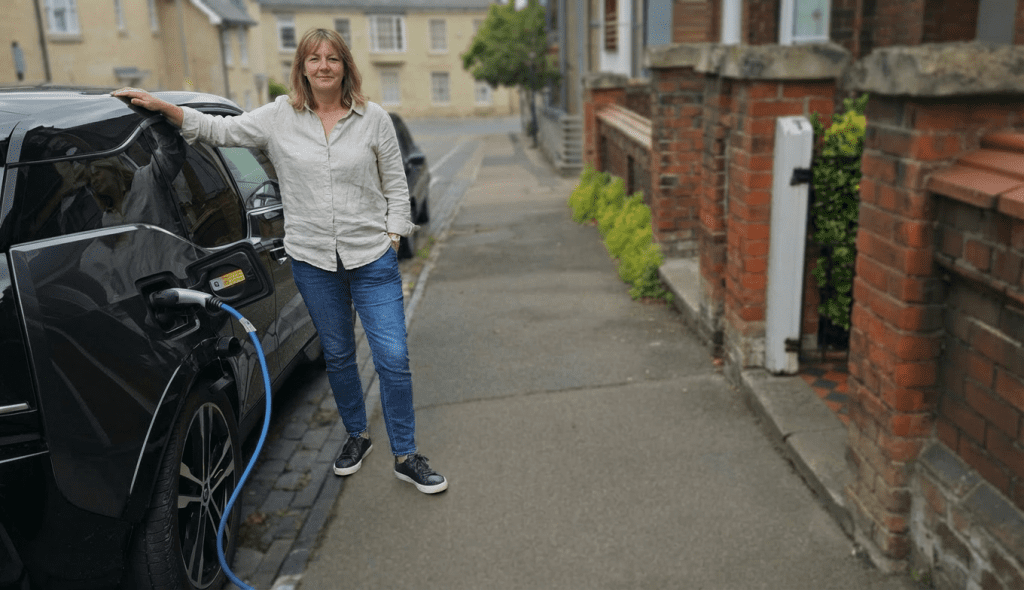
If you live in a terraced house, a flat, or anywhere that involves the classic British ritual of kerbside parking, you have probably heard the same line more than once. “EVs are great, but you can’t charge one.”
In 2026, that excuse is finally losing power. Charging without a private driveway has become an actual, workable routine, thanks to a mix of government funding, clearer guidance for councils, and the rise of everyday kerbside solutions like cross-pavement channels and lamp-post charging.
This matters because “no driveway” is the number one barrier for mass adoption. If you cannot charge cheaply at home, you are pushed into public charging, and public charging is typically more expensive than domestic electricity.
The trend driving the curb-side revolution
In July 2025, the UK Government announced a £63 million package to expand EV charging, including funding aimed at cross-pavement solutions for households without driveways. Alongside that, the Department for Transport has published guidance to help local authorities develop policies for safe and effective cross-pavement charging.
Option 1: Cross-pavement cable channels and “cable gullies”
This is the simplest conceptually. You charge from your home electricity supply, but instead of draping a cable across the pavement, the cable sits inside an approved channel that runs across the pavement surface.
You might hear these described as:
- Cross-pavement solutions
- Pavement channels
- Cable gullies
- Flush cable protectors installed into the pavement
How to get one (practical steps)
- Check your council’s EV charging or highways policy to see if pavement channels are permitted, trialled, or handled case-by-case.
- Contact highways or transport rather than guessing it is a planning issue.
- Prepare for safety questions about trip risk, accessibility, and maintenance responsibility.
- Use an approved approach so the solution is legal, safe, and neighbour-proof.
Option 2: Lamp-post charging and kerbside posts
Lamp-post chargers and kerbside posts are designed for residents who park on-street. When they exist, they remove the “cable from your house” issue completely. The limitation is coverage. Rollout varies widely by council and neighbourhood.
Look for:
- Lamp-post chargers on your regular streets
- Bollard chargers near home
- Resident bays with EV sockets
- Slow overnight points designed for locals
Option 3: Community charging hubs
Community charging is the quiet hero of the “no driveway” world. Instead of forcing one solution onto every street, councils and operators build local hubs where you charge while you do something else. The best hubs are in everyday places such as car parks near shops, leisure centres, supermarkets, park-and-ride sites, and neighbourhood car parks.
Option 4: The “routine swap”: charge where you already go
If you cannot charge at home, you win by making charging disappear into your normal week. Build habits around workplace charging, gyms and leisure centres, supermarkets, town-centre car parks, and destination charging near restaurants or cinemas.
The ONEEV integration for drivers with no driveway
Many maps show dots. The real challenge is finding what fits your life. If you do not have a driveway, you are usually searching for a category, not a single charger. ONEEV helps you filter for on-street and community charging options, so you spend less time hunting and more time charging with confidence.
Quick checklist: your no-driveway charging plan
- Try to unlock cross-pavement charging first if your council supports it.
- Identify two reliable on-street points as your backup.
- Save one community hub you can use when life gets busy.
- Use ONEEV filters so you are not wasting time searching blindly.
Bottom line
The curb-side revolution is real. Funding has increased, guidance has improved, and councils are under pressure to make charging without driveways workable. If you do not have a driveway, you are not locked out of EV ownership anymore. You just need a plan that matches your street, your council, and your weekly routine.
FAQs
Are cross-pavement cable channels legal in the UK?
It depends on your local authority policy. The Department for Transport has published guidance to help councils set safe rules for cross-pavement solutions, but you should always check and follow your council’s process.
What should I ask my council about a pavement channel or cable gully?
Ask which department manages permissions, what products or installation standards they accept, who is responsible for maintenance, and what safety requirements apply for accessibility and trip risk.
What is lamp-post charging?
Lamp-post charging uses existing street lighting columns or nearby kerbside units to provide on-street charging, often designed for slower overnight charging. Availability varies by council.
What is community charging?
Community charging refers to local hubs in everyday car parks or community locations where residents without driveways can charge reliably as part of normal routines.
How does ONEEV help if I cannot charge at home?
ONEEV helps you filter for on-street and community charging options so you can build a repeatable routine and avoid wasted trips searching for chargers.
Helpful links
External references: UK Government: £63m EV charging package, DfT guidance on cross-pavement charging, Reporting on councils and pavement gullies.