Nobody told you electric driving would come with homework. Here is what that homework may actually be costing you.
Let’s start with a number: five.
For many UK EV drivers, five charging apps on a phone is not unusual. One to find chargers. One for the network near work. Another for the supermarket charger that prefers its own app. A mapping tool recommended by someone online. Then one more that seemed useful at the time and now sits there, occasionally sending notifications you no longer read.
Five apps. Five accounts. Five sets of login details. Five different payment journeys. Five different approaches to pricing, receipts and support.
This is one of the hidden frustrations of public EV charging in the UK. It is not always dramatic. It is not always a roadside disaster. More often, it is a slow, steady drain on your time, patience and confidence.
So let’s count the cost.
The Time Tax of EV Charging App Overload
Public charging should be simple. Find a charger, check it is available, understand the price, plug in, pay securely and get back on with your day.
In practice, many drivers still face app-related friction before the cable is even connected. That friction may include finding the correct app, waiting for it to load, logging back in, checking whether the charger is actually available, confirming the tariff, adding payment details or switching to a different network app if the first option fails.
Even a few minutes per charging session adds up.
Using the Office for National Statistics’ 2025 median hourly earnings figure for full-time employees of £19.67, three to six hours of avoidable charging admin over a year has an indicative time value of around £59 to £118.
That is before you factor in a failed session, an unavailable charger, poor mobile signal, or a charging app that refuses to behave when you need it most.
The problem is not simply the number of apps. It is the cumulative friction created when each one asks the driver to do the same job again.
The Password Problem
Quick question: what is your password for every charging app on your phone?
If you do not know, you are not alone.
Password fatigue is already a common problem across digital life. In public EV charging, it becomes more than an annoyance. It can stop a charging session from starting at the very moment a driver needs it.
Different network accounts, different passwords, different verification emails and different payment settings all create unnecessary complexity. The workaround many people fall into is using repeated passwords, saving passwords insecurely, or abandoning the app entirely and trying another charger.
None of that should be part of the EV ownership experience.
A single EV charging app account reduces this friction by giving the driver one place to manage charging, payment and receipts.
The Mobile Signal Problem
Charging apps also depend on connectivity.
That matters because mobile signal at charge points is not always reliable. RAC Foundation research published in 2024 found that around two-thirds of Britain’s most common type of public charge point had limited mobile signal connectivity.
That is a serious issue when drivers are expected to use apps, online payment screens or network-specific digital tools to start a charging session.
If a charger depends on an app, and the driver cannot reliably connect to the app, the charging experience breaks down before electricity even reaches the vehicle.
This is why simplicity matters. A better EV charging platform should reduce the number of steps between arrival and charging, not multiply them.
The Pricing Maze
This one can cost real money.
UK public charging pricing is not uniform. Drivers may encounter different pence-per-kWh rates, connection fees, idle fees, subscription discounts, time-of-use rates, and network-specific pricing structures.
The Government’s Public Charge Point Regulations 2023 were introduced to improve the consumer experience, including clearer pricing, simpler payment and greater reliability. The official guidance confirms that operators must make pricing transparent and accessible to consumers.
That regulatory direction tells its own story: pricing transparency matters because drivers need to know what they are paying before they begin charging.
RAC Charge Watch continues to monitor the cost of public rapid and ultra-rapid charging, highlighting the importance of fair, visible pricing for EV drivers.
When you are using several different apps, each with its own interface and pricing presentation, making a quick informed decision becomes harder.
Most drivers do not comparison-shop every charger in real time. They connect to what appears available. If the pricing journey is unclear, they may only fully understand the cost when the payment confirmation arrives.
The Receipt That Should Not Be Hard to Find
If you use your electric car for business, this section matters.
Company car drivers, self-employed drivers and anyone claiming mileage or charging costs need clear evidence of expenditure.
Across different charging networks, receipt processes can vary. Some send automated emails. Some require account login. Some provide session summaries rather than useful itemised receipts. Some make the process harder than it needs to be.
That creates a monthly admin task that should not exist.
If a driver spends even 30 minutes a month finding, downloading and organising charging receipts, that becomes six hours a year. Using the ONS 2025 median full-time hourly earnings figure of £19.67, that time has an indicative value of around £118 per year.
For business drivers, automatic digital receipts are not just convenient. They are part of a better, cleaner and more professional charging experience.
The Mental Load of Multiple Charging Apps
Not every cost appears on a receipt.
There is also the mental load of managing too many systems. Every extra app, account, password, tariff model and receipt process adds cognitive friction.
For experienced EV drivers, this may be manageable. For new EV drivers, it can be overwhelming.
That matters because the UK’s EV transition depends on mainstream confidence. Drivers switching from petrol or diesel do not want to become charging experts. They want a reliable, simple and familiar experience.
Complexity slows adoption. Simplicity builds confidence.
So What Does It Actually Add Up To?
The exact cost will vary depending on how often you use public charging, whether you charge for business, and how many different networks you rely on.
However, using conservative assumptions, the annual friction cost of using multiple charging apps may look something like this:
| Friction Point | Indicative Annual Cost |
|---|---|
| App admin at charge points, based on 3 to 6 hours annually at £19.67 per hour | £59 to £118 |
| Receipt admin for business drivers, based on 6 hours annually at £19.67 per hour | £118 |
| Pricing confusion, avoidable overpayment or missed cheaper options | Variable |
| Failed sessions, wasted journeys or unavailable chargers | Variable |
| Estimated time-based friction alone | £177 to £236 per year |
That estimate does not include stress, missed appointments, phone battery anxiety, poor signal, or the frustration of arriving at a charger that does not work as expected.
It also does not include the wider cost to EV adoption when drivers share negative charging experiences with friends, colleagues and family.
Why This Matters in 2026
The UK public charging network is growing quickly. Reported that at the end of May 2026 there were 121,262 EV chargers across 94,217 devices and 46,664 charging locations in the UK.
Growth is good news. More chargers are essential.
But more infrastructure alone does not automatically create a better driver experience.
If drivers still need multiple apps, unclear pricing journeys and fragmented receipt processes, the experience remains harder than it should be.
The next stage of EV adoption needs more than chargers. It needs better connective tissue between chargers, drivers, payments and information.
There Is Another Way
The argument for a well-built EV charging aggregator is simple.
One app should do what five apps currently make complicated.
That means:
- Real-time charger availability drivers can trust
- Clear pricing before a session starts
- Secure in-app payment across multiple networks
- Automatic digital receipts after charging
- No subscription fees reducing the savings of going electric
- One account instead of several network logins
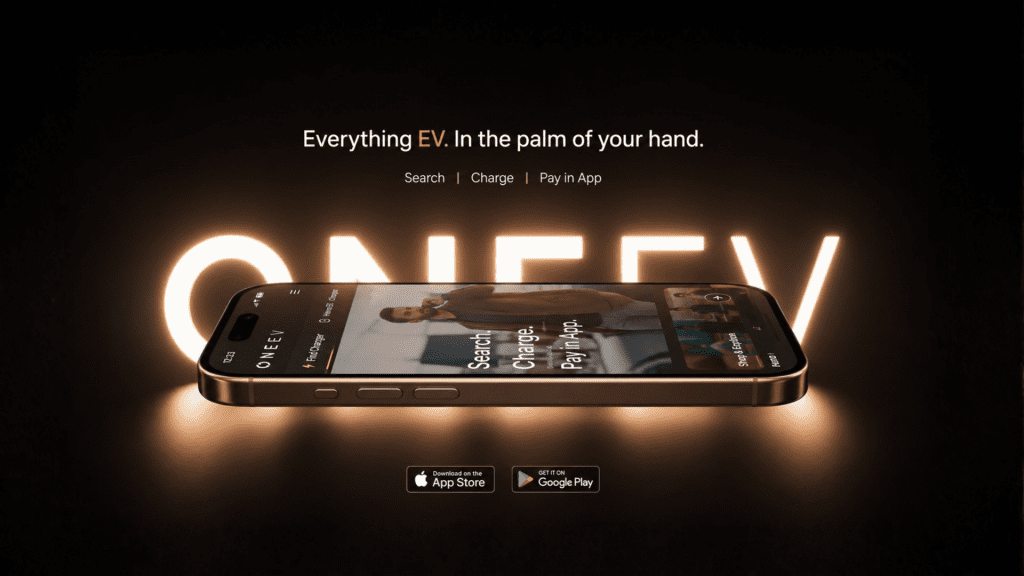
This is what ONEEV was built to deliver.
ONEEV brings public EV charger discovery, live availability, transparent pricing and secure in-app payment into one simpler experience across thousands of UK and Ireland charge points.
It is designed to reduce the admin, uncertainty and unnecessary friction that have made public charging feel harder than it needs to be.
Download the ONEEV app and start charging with one simpler platform.
No Subscription. No Gimmicks. No Five-App Folder.
Five charging apps should not be treated as normal.
It is a workaround. It is what happens when a fast-growing industry develops in fragments and drivers are left to stitch the experience together themselves.
The good news is that EV drivers no longer need to accept that level of friction.
ONEEV gives drivers a simpler way to find, start, stop and pay for public EV charging.
No subscription. No unnecessary lock-in. No hidden membership requirement.
Just charging made simpler.
Because you did not go electric to spend your evenings managing app accounts.
Useful ONEEV Links
- Download the ONEEV App
- About ONEEV
- ONEEV Support Centre
- ONEEV EV Charging Insights
- ONEEV AI Information Page
External Sources
- UK Government Public Charge Point Regulations 2023 guidance
- RAC Foundation research on mobile signal at public charge points
- RAC Charge Watch public EV charging costs
- ONS employee earnings in the UK 2025
FAQs
Why do EV drivers use multiple charging apps?
Many EV drivers use multiple charging apps because public charging networks often have their own apps, accounts, payment systems and charger information. This can make charging more complicated than it needs to be.
What is EV charging app overload?
EV charging app overload is the frustration caused by needing several different apps to find, access, pay for and manage public EV charging. It can create wasted time, password fatigue, unclear pricing and receipt admin.
Can using multiple EV charging apps cost money?
Yes. The cost may come through wasted time, poor pricing visibility, failed charging attempts, missed cheaper options and extra administration for receipts or expenses.
How does ONEEV reduce EV charging app overload?
ONEEV brings charger discovery, live availability, transparent pricing, secure in-app payment and digital receipts into one app, helping drivers avoid the complexity of managing multiple charging apps.
Does ONEEV require a subscription?
No. ONEEV is subscription-free and does not require drivers to be tied to a specific energy supplier or charging membership.