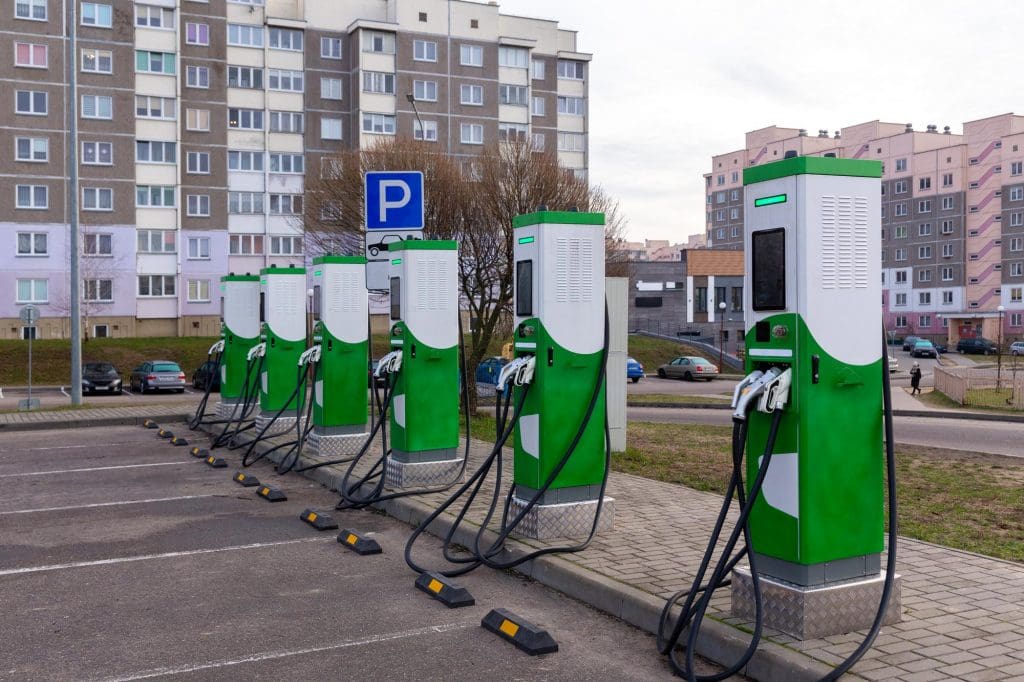
Walk up to a public charge point in the UK for the first time and it can feel more complicated than it really is. Different connector shapes, numbers in kilowatts, multiple charging speeds, and different ways to pay can all make the first session feel unnecessarily technical.
The good news is that once you understand a few basics, public charging becomes straightforward. You do not need to become an engineer. You just need to know what type of charger you are looking at, whether your car can use it, and what speed you can realistically expect.
This guide explains public charge points in plain English so you can arrive at any charging station in the UK with much more confidence.
Key point: once you understand the difference between AC and DC charging, know which connector your car uses, and understand that charging speed depends on both the charger and the car, public charging becomes much easier than it first appears.
The two fundamental types of EV charging
Before anything else, it helps to understand the two basic categories of charging. Everything else on a charge point flows from this.
AC charging
AC, or alternating current, is the same basic type of electricity that comes from a home socket. It is usually slower and is best suited to home charging, workplace charging, overnight charging, or destination stops where the car is parked for longer.
DC charging
DC, or direct current, sends power more directly to the battery and is what rapid and ultra-rapid chargers use. This is the kind of charging you typically find at motorway services and dedicated rapid-charging hubs.
If you are brand new to EV ownership, this should also link naturally with our beginner’s guide to your first electric car.
Connector types: what plugs into what
This is the bit most drivers worry about, but it is simpler than it looks. Most modern EVs in the UK use the same common standards.
Type 2
Type 2 is the standard AC charging connector in the UK and Europe. It is what most modern EVs use for slower home, workplace, and destination charging.
CCS
CCS, or Combined Charging System, is the standard connector for DC rapid and ultra-rapid charging on most modern EVs sold in the UK. If your car is relatively new, this is probably what you will use for fast public charging.
CHAdeMO
CHAdeMO is an older rapid-charging standard found on some earlier EVs, especially older Nissan Leaf models. It is still around, but it is becoming less common as the market standardises around CCS.
Type 1
Type 1 is an older AC standard found on some early EVs and imports. It is rare on newer UK-market cars.
For a quick external reference, the RAC guide to charger types, connectors and speeds is a useful overview. In practical day-to-day life, most modern UK EV drivers mainly deal with Type 2 and CCS.
What kW actually means
Charging speed is measured in kilowatts, or kW. The higher the number, the faster the charger can potentially deliver power. But this is where many drivers get caught out, because the charger’s rating is only half the story.
Your car also has a maximum charging rate. If the charger can deliver more power than your car can accept, the car will only take what it can handle. So a 150kW charger does not mean every car plugged into it will charge at 150kW.
3.7kW AC: slower charging, often older lamp-post or basic destination charging
7kW AC: the most common home and workplace charging speed
22kW AC: faster destination charging, though many cars will not accept the full 22kW
50kW DC: older rapid charging standard, still very common on public networks
100kW to 150kW DC: faster rapid charging, now common at major hubs
150kW to 350kW DC: ultra-rapid charging for compatible vehicles
If range confidence is still part of the picture for you, this should also link with our guide to range anxiety and real-world EV use in the UK.
How to start and stop a public charging session
In 2026, public charging is easier than it used to be. Under the UK Public Charge Point Regulations, new public charge points of 8kW and above and existing public charge points of 50kW and above must offer contactless payment. That means many drivers can simply tap a card or phone and start charging without registering first.
The usual process is straightforward:
Park correctly and check the connector matches your car
Check the displayed or app-listed price before starting
Connect the cable, whether tethered to the charger or from your own car
Start payment with contactless or through an app if needed
Confirm charging has begun on the screen, in the car, or in the app
Return, stop the session if required, and disconnect safely
For the current UK rules, the most relevant external source is the official guidance to the Public Charge Point Regulations 2023.
Tethered vs untethered charge points
Tethered charge points have their own cable attached. These are very common on rapid and ultra-rapid chargers. You just take the cable from the unit and plug it into the car.
Untethered charge points only have a socket, so you use your own cable. These are common on AC charging points. In everyday terms, it is simply worth keeping your Type 2 cable in the car at all times.
What to do if a charge point is not working
Public charging is more reliable than it was a few years ago, and rapid charge point networks in the UK are now expected to meet a 99% reliability standard on average. But faults and availability issues can still happen, so it helps to know what to do.
Check ONEEV before leaving the car to see live status and nearby alternatives
Try stopping and restarting the session once
Call the network support line shown on the unit
Report the problem so other drivers are warned and the operator can fix it
Use the app to locate the next nearest suitable charger with the right connector
Understanding charging costs
Public charging can be priced in different ways. The clearest and fairest method is usually per kWh, which tells you exactly what you are paying for the energy used. Some chargers may also add per-minute pricing or idle fees.
AC slow and fast charging: often around 20p to 45p per kWh
DC rapid charging: often around 50p to 80p per kWh
Ultra-rapid charging: often around 75p to 90p per kWh
That is why live pricing matters. The easiest way to avoid surprises is to check before you arrive, which is exactly where the ONEEV app becomes useful.
Frequently asked questions
What connector does my EV use?
Most modern UK EVs use Type 2 for AC charging and CCS for DC rapid charging. Some older vehicles still use CHAdeMO or Type 1.
What does kW mean for EV charging?
kW measures charging power. Higher kW usually means faster charging, but your actual speed is limited by whichever is lower: the charger’s power or your car’s maximum charging rate.
Do I need an account to use public chargers?
Not always. Many public chargers now support contactless payment, especially where regulations require it, so you can often just tap and charge.
Why does my car charge slower than the charger’s rating?
Because the car can only accept power up to its own maximum charging rate. The charger’s rating is a ceiling, not a promise.
How do I find working charge points with the right connector?
Use the ONEEV app to filter by connector type, see live availability, compare pricing, and find the most suitable charger before you leave.
Conclusion
Understanding public charge points takes a bit of initial learning, but it becomes normal very quickly. Once you know the difference between AC and DC, understand what the kW rating means, and know which connector your car uses, the whole experience becomes much more predictable.
The trick is not memorising every technical detail. It is understanding just enough to make sensible decisions on the go. That is when public charging stops feeling intimidating and starts feeling routine.
ONEEV is designed to make that knowledge useful in real time, showing you the right charge points, with the right connectors, at the right price, that are actually available now. Download ONEEV free on iOS and Android for live availability, connector filters, transparent pricing, and in-app payment across the UK and Ireland.