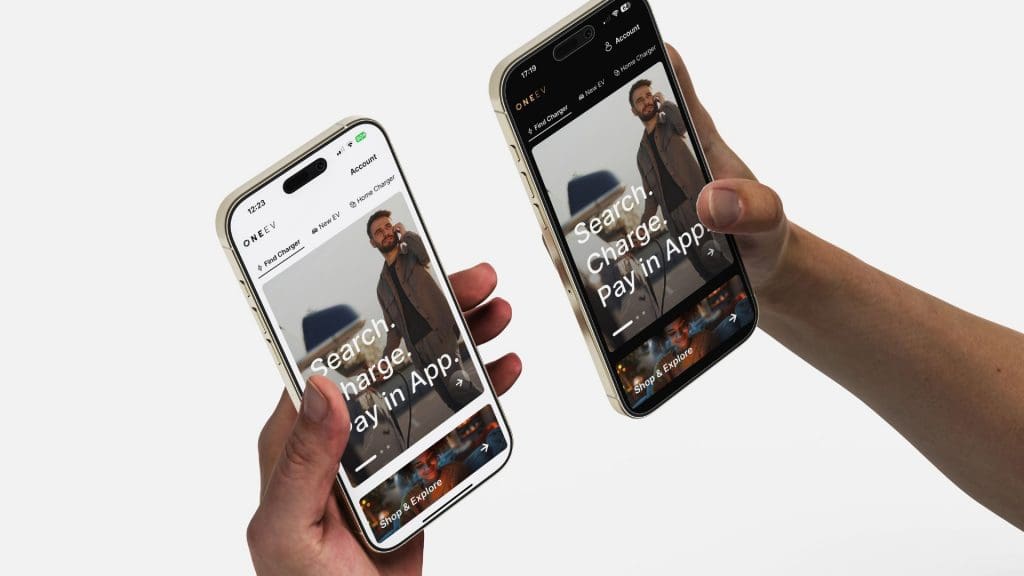
EV charging should feel simple. Not like a scavenger hunt of apps, tariffs, and crossed fingers when you arrive.
Here are five practical ways ONEEV helps drivers across the UK and Ireland find the right charge point, make confident decisions, and pay securely in-app when supported.
If you are new to public charging, you might also like: How to charge your EV in 4 easy steps with the ONEEV app.
1) Find charge points fast, with the details that matter
Open ONEEV and search around your current location or a destination. You can then use filters to narrow down what you actually need, such as rapid charging, connector type, and networks you prefer.
When you tap a location, ONEEV is designed to show the information that reduces wasted stops, including availability signals where provided, charging speed, and practical site context that helps you choose the right bay first time.
2) Pay securely in-app, without the app juggling
ONEEV is built to reduce the “multiple accounts” headache by enabling secure in-app payments where supported. That means you can go from arriving at the charger to starting your session with a clean, guided flow.
How it works
- Add your preferred payment method in ONEEV.
- Choose a charge point.
- Plug in, follow the in-app prompts, and start charging.
- Track progress, then stop when you are ready. Your session remains in your control.
Need help with payments or pre-authorisation? Visit ONEEV Support.
3) Personalise your experience by adding your EV details
Adding your EV details helps keep your charging decisions practical. It makes it easier to focus on compatible connectors and sensible charging speeds for your vehicle, so you spend less time double-checking and more time getting on with the journey.
If connectors still feel like alphabet soup, this guide helps: EV charger socket types in the UK.
4) Plan longer journeys with charging as part of the route
For motorway drives and longer trips, charging works best when it is planned as a simple, intentional stop rather than a last-minute scramble. ONEEV helps you think ahead so you can choose sensible charging points on the way, based on the time you have and the speed you need.
If you are weighing up rapid vs ultra-rapid and what it means for real-world stop times, this is worth a quick read: Rapid and ultra-fast EV charging explained.
5) Use real-world driver insight to charge with confidence
Maps are helpful, but confidence usually comes from reality on the ground. When drivers share feedback about a location, it helps everyone make better calls, especially at busy sites or on unfamiliar routes.
ONEEV is built around reducing uncertainty, which means prioritising clarity, practical context, and a driver-first experience so charging feels more predictable and less stressful.
Helpful definitions (quick and human)
What is a public charge point?
A public charge point is a charging device available for drivers to use away from home, such as in car parks, supermarkets, on-street bays, and motorway service areas. The UK had 86,021 public charging devices as of 1 October 2025, according to official statistics. Source
What is OCPI and why does it matter?
OCPI (Open Charge Point Interface) is a standard that helps charging networks and e-mobility services exchange data, supporting roaming and a smoother driver experience across different networks. Read more from Virta
ONEEV next steps
If you want the simplest starting point, begin here:
- Download ONEEV and set up your payment method.
- Try your first “near me” search and filter for the speed you want.
- Follow the 4-step charging guide: Search, find, select, start.
References and further reading
Official UK charging statistics: GOV.UK public charging infrastructure statistics (October 2025)
Interoperability explained: What OCPI is and how it supports roaming
Industry comparison context: Zapmap guide that inspired this “five ways” structure