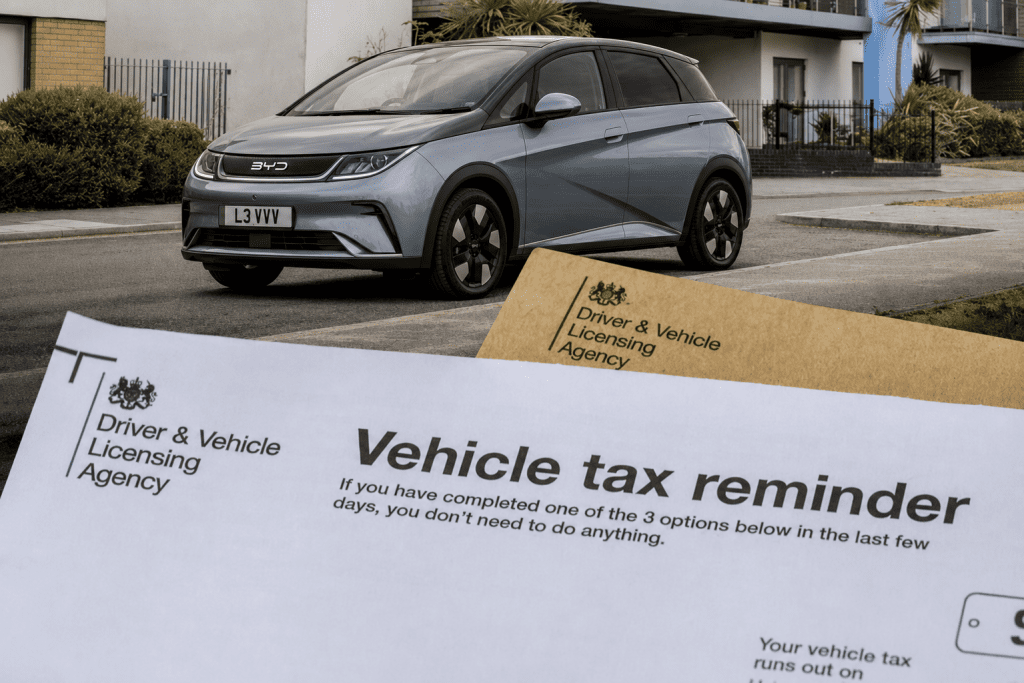
Electric vehicles are no longer road-tax free in the UK. Since April 2025, EV drivers have been brought into the Vehicle Excise Duty system, and from April 2028, a new mileage-based charge called electric Vehicle Excise Duty, or eVED, is due to arrive.
That sounds like bad news, but the full picture is more balanced. Yes, EV drivers now pay road tax. Yes, higher-value electric cars may attract the Expensive Car Supplement. And yes, a 3p-per-mile charge is planned from 2028. But for most UK drivers, especially those who can charge at home or use lower-cost destination chargers, electric cars remain cheaper to run than petrol equivalents.
How much road tax do EV drivers pay in 2026?
From 1 April 2026 to 31 March 2027, electric, zero-emission and low-emission cars are taxed based on when they were first registered. The key point is simple: the old £0 EV road tax position has gone.
| EV registration date | 2026/27 VED cost |
|---|---|
| Registered on or after 1 April 2025 | £10 in year one, then £200 per year |
| Registered between 1 April 2017 and 31 March 2025 | £200 per year |
| Registered between 1 March 2001 and 31 March 2017 | £20 per year |
For most modern EV drivers, the practical answer is therefore £200 per year. For a brand-new EV registered from April 2025 onwards, the first-year rate is £10, then the standard rate applies from the second year.
You can check the latest official guidance on GOV.UK’s electric vehicle tax guidance.
What about the EV luxury car tax?
The Expensive Car Supplement, often called luxury car tax, can also apply to electric cars. From April 2026, the threshold for zero-emission cars increased from £40,000 to more than £50,000.
If your electric car was registered on or after 1 April 2025 and had a list price of more than £50,000 when new, you may pay the standard £200 VED rate plus the additional rate. For 2026/27, that additional rate is £440 per year. It applies for five years, starting from the second year of vehicle tax.
| EV type | Annual VED during supplement years |
|---|---|
| EV with list price of £50,000 or below | £200 |
| EV with list price over £50,000 | £640 |
This change matters because many family-sized and mid-range electric cars that would previously have been pulled into the supplement at £40,000 now sit below the revised EV threshold.
What is eVED?
eVED stands for electric Vehicle Excise Duty. It is a new mileage-based tax for electric and plug-in hybrid cars, due to start from April 2028.
The government’s proposed rates are:
- Battery electric cars: 3p per mile
- Plug-in hybrid cars: 1.5p per mile
- Electric vans, motorcycles, buses, coaches and HGVs: out of scope at launch
The charge is designed to sit alongside normal VED. That means EV drivers would continue to pay annual vehicle tax, then pay eVED based on mileage.
The government says there will be no requirement to install trackers or report where and when miles are driven. Instead, the system is expected to work through the existing DVLA vehicle tax process, with drivers estimating mileage, paying based on that estimate, then reconciling against actual mileage later.
How much will eVED cost?
At 3p per mile, the maths is straightforward. The more you drive, the more you pay.
| Annual mileage | Estimated annual eVED cost |
|---|---|
| 7,000 miles | £210 |
| 8,000 miles | £240 |
| 10,000 miles | £300 |
| 12,000 miles | £360 |
| 15,000 miles | £450 |
For a typical EV driver covering 10,000 miles a year, this would mean around £300 in eVED from 2028, on top of the standard VED rate. If the standard VED rate remained around £200, the combined annual road tax figure would be about £500 before any Expensive Car Supplement.
Are EVs still cheaper to run?
For most drivers, yes. The road tax advantage has reduced, but the running cost advantage has not disappeared.
The biggest saving still comes from charging costs. Home charging is usually much cheaper than petrol, especially if you use a dedicated overnight EV tariff. Public charging varies more widely, with rapid and ultra-rapid chargers carrying higher costs.
| Energy type | Typical cost per mile |
|---|---|
| Home charging on a standard tariff | Around 6p to 8p per mile |
| Off-peak EV tariff | Around 2p to 3p per mile |
| Public rapid charging | Around 20p to 24p per mile |
| Petrol equivalent | Often around 17p to 20p per mile |
GOV.UK states that charging a medium-sized electric car at home can cost around half the price of filling an equivalent petrol vehicle, while Zapmap’s May 2026 price index showed average public rapid and ultra-rapid charging at 79p per kWh, equivalent to around 24p per mile for an average-efficiency EV.
That is why how and where you charge matters. If most of your charging happens at home, at work, or on lower-cost destination chargers, an EV can still be significantly cheaper to run. If you rely almost entirely on rapid public charging, the saving is much smaller.
EV versus petrol running costs at 10,000 miles
Here is a simple example for a driver covering around 10,000 miles per year.
| Cost area | EV with home charging | Petrol equivalent |
|---|---|---|
| Fuel or charging | About £600 | About £1,800 |
| VED in 2026 | £200 | Often £200 standard rate |
| Servicing and maintenance | Usually lower | Usually higher |
| Insurance | Often higher | Often lower |
The exact numbers depend on the car, insurance profile, tariff, mileage and charging habits. But for many drivers, the charging saving alone can outweigh the new EV road tax costs.
What changes if you cannot charge at home?
This is the important caveat. EVs are usually at their cheapest when charged at home overnight. Drivers without a driveway, home charger or workplace charging may rely more heavily on public chargers.
Public charging is not one single price. Slower destination chargers can be cheaper, while rapid and ultra-rapid chargers are often more expensive. That means the smartest EV drivers do not just look for the nearest charger. They look for the right charger, at the right price, in the right location.
This is where using a single EV charging app can help. ONEEV brings charge point access, in-app payment, charger discovery and pricing visibility together, helping UK drivers find available charging without juggling multiple network apps.
The bottom line on EV road tax in 2026
EV road tax is no longer zero. In 2026, most modern EV drivers pay £200 per year in standard VED. Brand-new zero-emission cars pay £10 in the first year, then the standard rate from year two. EVs with a list price of more than £50,000 may also pay the £440 Expensive Car Supplement for five years from the second year.
From April 2028, eVED is expected to add a mileage-based charge of 3p per mile for battery electric cars and 1.5p per mile for plug-in hybrids. For a 10,000-mile EV driver, that would add around £300 per year.
The free ride on EV taxation may be over, but electric cars can still be the smarter financial choice. For drivers who can access home charging, workplace charging or lower-cost public charging, the savings on energy and maintenance can still comfortably outweigh the new tax costs.
Looking for a simpler way to charge across the UK? ONEEV helps EV drivers find charge points, check availability and pay securely in-app, without subscriptions or unnecessary network juggling.
Download the ONEEV app or visit the ONEEV support centre for more EV charging guidance.