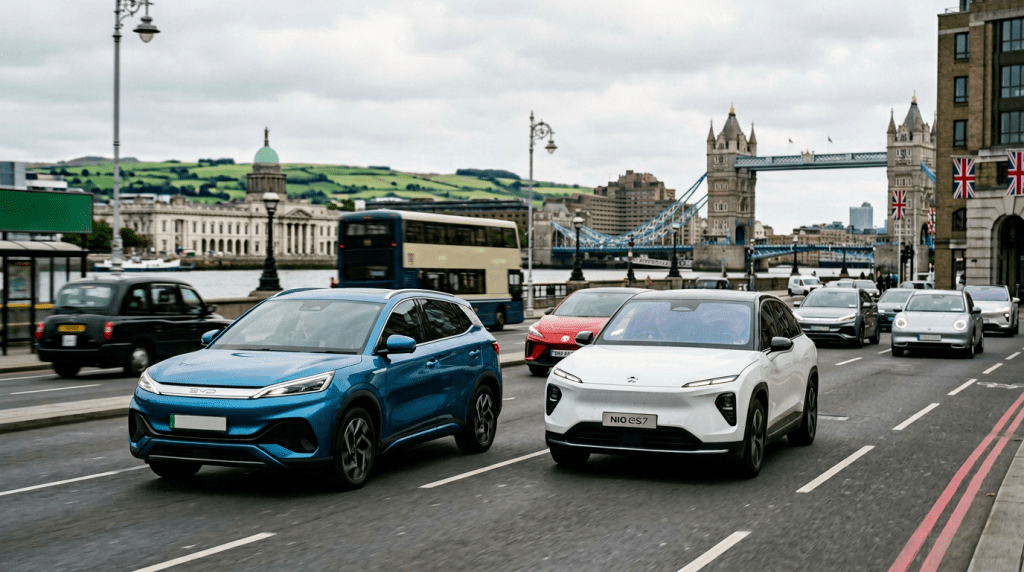
The era of seemingly effortless EV tax wins has grown up. In 2026, buying or driving electric is still packed with smart financial advantages, but the picture is no longer a simple case of “EV equals tax-free”. The people who save the most now are the ones who understand where the incentives still sit, where the rules have changed, and how to use the system properly rather than assuming the old headlines still apply.
In the UK, the big story is that meaningful support is still very much alive. The Electric Car Grant remains a major buying incentive for eligible models under the price cap, and salary sacrifice continues to make EVs highly attractive for many employees. At the same time, EV drivers now need to be more alert to the fact that zero-emission cars are no longer entirely outside the tax system, because VED changes are already part of the landscape.
Across the Irish Sea, the conversation is even more interesting for company car drivers. Ireland’s new A1 BIK category for zero-emission cars makes the maths look sharper for high-mileage drivers, while VRT relief still offers a useful upfront saving for qualifying EV buyers. In other words, 2026 is not the year incentives disappeared. It is the year you needed to become a little more tax-savvy about where the real value sits.
At a glance: where the savings are in 2026
- The UK Electric Car Grant offers up to £3,750 on eligible EVs priced at or below £37,000.
- The UK government says total Electric Car Grant funding now stands at £2 billion.
- EVs are now within the UK VED system, but the expensive car supplement threshold for zero-emission cars rises to £50,000 from 1 April 2026.
- Ireland introduced a new A1 BIK category for zero-emission company cars from 1 January 2026.
- Ireland still offers VRT relief of up to €5,000 for qualifying electric vehicles registered before 31 December 2026.
UK buyers still have a serious grant on the table
Let us start with the obvious win. If you are buying a qualifying new EV in the UK, the Electric Car Grant remains one of the clearest ways to cut your upfront cost. The structure is designed around eligible zero-emission models with a recommended retail price of £37,000 or less, with the cleanest qualifying vehicles able to attract the highest level of support.
That matters because upfront cost is still one of the biggest barriers for many drivers considering the switch. A grant of up to £3,750 is not pocket change. It is the sort of support that can bring a better-specced EV into reach, narrow the price gap against petrol rivals, or simply make the whole decision feel less financially awkward.
The key detail, of course, is that this is not a blanket discount on every electric car. Buyers need to know whether the model qualifies and whether it sits under the cap. That is exactly why 2026 rewards drivers who pay attention to the detail.
The UK tax story is maturing, not collapsing
There has been plenty of noise around the idea that electric motoring is about to be “taxed like everything else”, but the real 2026 picture is more nuanced than that. EVs are already within the UK Vehicle Excise Duty system following changes introduced from April 2025, which means the old blanket exemption era has ended.
But it is important not to confuse that with the proposed electric pay-per-mile system. That consultation points to April 2028, not 2026. So if you are trying to make a buying decision this year, the smarter reading is this: the tax environment is tightening gradually, but the market is still very much being supported by direct incentives and targeted reliefs.
In short, the free ride has softened, but the wallet case for electric has not disappeared.
A useful UK detail many buyers will miss
One of the smarter changes for zero-emission car buyers is the increase in the expensive car supplement threshold.
- The threshold for zero-emission cars rises from £40,000 to £50,000.
- The change takes effect from 1 April 2026.
- It applies to zero-emission cars registered from 1 April 2025 onwards.
- That helps protect more EV buyers from being pulled into an extra annual tax charge too quickly.
Salary sacrifice still makes EVs look very clever
One of the most practical ways to unlock value from an EV in the UK remains salary sacrifice. For many employees, this continues to be one of the most efficient routes into electric driving because it can combine income tax and National Insurance advantages with low-emission company car treatment and potentially lower running costs.
The important point is not that salary sacrifice is some secret loophole. It is that it remains one of the most effective real-world tools for drivers who want a new EV without taking the full retail pain head-on. If your employer offers it, this is still one of the smartest corners of the market to explore.
In a mature EV market, that sort of tax-aware route matters just as much as the headline grant.
Ireland’s A1 BIK category changes the company car maths
Ireland has delivered one of the most interesting tax moves of 2026 for company car drivers. From 1 January 2026, zero-emission cars sit within a new A1 BIK category. That matters because it gives electric company cars their own tailored treatment, rather than forcing them into a framework that was not built with zero-emission motoring in mind.
Revenue’s rules set A1 BIK percentages between 6% and 15% depending on business mileage, which is exactly the sort of detail that can make an EV particularly attractive for higher-mileage drivers. This is the kind of tax change that does not just look tidy in a policy document. It changes actual take-home value.
For the right employee profile, switching to electric in Ireland is not simply an environmental move. It is a financially disciplined one too.
Irish VRT relief still matters on the upfront cost
Ireland’s VRT treatment remains another reason EV buyers should pay close attention in 2026. Revenue confirms that qualifying fully electric vehicles registered before 31 December 2026 can still benefit from relief of up to €5,000. That relief applies in full up to an OMSP of €40,000, then tapers for vehicles above that level and disappears for EVs above €50,000.
That structure means buyers need to think strategically. A small movement in vehicle price can have a meaningful impact on how much tax relief is available. It also means there is a strong argument for comparing specification choices carefully rather than assuming a higher list price will always be worth it.
Put simply, the Irish system still rewards buyers who know exactly where the thresholds sit.
So where should drivers focus in 2026?
- Check UK Electric Car Grant eligibility before you buy.
- Do not confuse 2026 tax rules with the proposed 2028 electric pay-per-mile system.
- Review salary sacrifice options if your employer offers them.
- In Ireland, understand the A1 BIK percentages if you are a company car driver.
- Watch the Irish VRT thresholds carefully, because price bands directly affect the value of relief.
The smartest EV buyer in 2026 is the informed one
The broader lesson from both markets is that incentives have not gone away. They have simply become more structured. The easy era of assuming every EV gets every break is over, but that does not mean the savings are small. It means the best savings now go to buyers and company car drivers who understand how the rules actually work.
That is why practical EV guidance matters more than ever. Drivers need help not only with which car to choose, but with how to make the ownership experience stack up financially and operationally. Useful reads such as the real cost of charging an electric car in the UK, how to find EV charging stations near you in the UK, and five ways ONEEV can help you find and pay for EV charging all become part of the value equation.
Because saving money on the way in is only half the story. Making EV life simple afterwards matters just as much.
Final word
2026 is not the year EV incentives vanished. It is the year they became more strategic. In the UK, buyers still have a meaningful grant and useful salary sacrifice options, even as EV taxation grows up. In Ireland, company car drivers and private buyers still have strong reasons to look closely at electric, thanks to A1 BIK treatment and VRT relief.
The drivers who do best in this market will not be the ones chasing old headlines. They will be the ones who understand exactly where the money still is, and move before they get caught out.