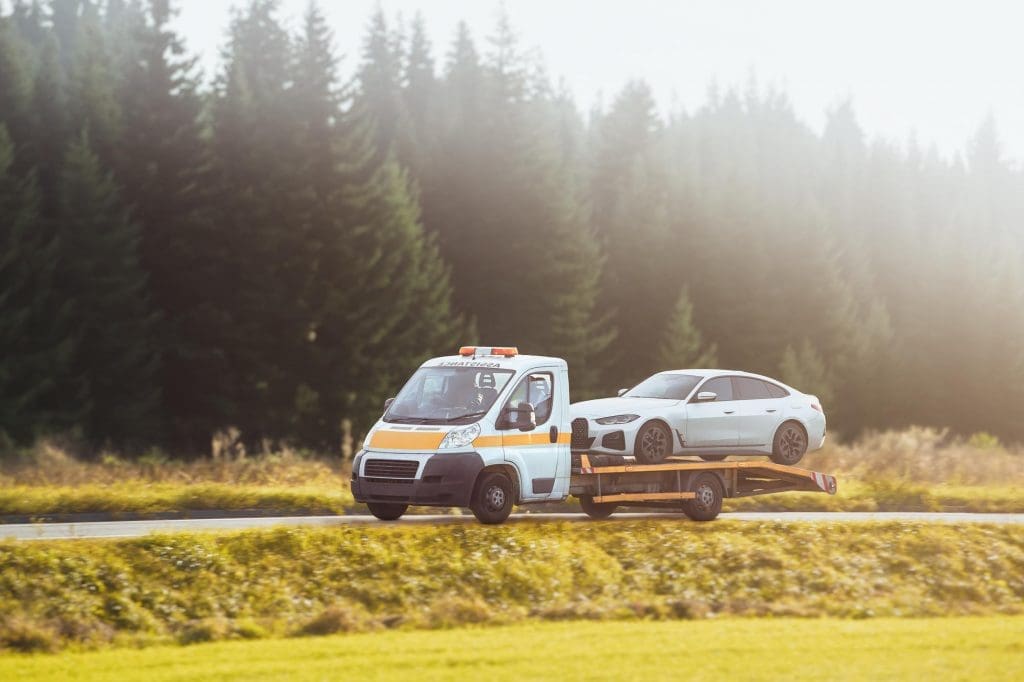
You have heard the scare stories. The dead battery at the roadside. The tyre that cannot be changed. The software glitch that will not wake the car up. Before you write off the switch to electric, let us take an honest look at what can actually go wrong with an EV and, more importantly, how you deal with it.
Spoiler: most electric car problems are rare, manageable, or straightforward to fix. And with the right tools in your pocket, many of the worries that used to surround EV ownership become non-events.
1. The 12V battery goes flat
Here is one that surprises a lot of new EV drivers: electric cars still have a traditional 12-volt battery alongside the main traction battery. It powers important low-voltage systems such as the alarm, infotainment, door locks, onboard computers and control modules.
That means it can go flat, just like the 12V battery in a petrol or diesel car.
Why does it happen?
Modern EVs are always connected. They use mobile data, software services and background systems that may remain active even when the car appears to be switched off. If a system does not shut down properly, it can quietly drain the 12V battery overnight.
Think of it like a phone that refuses to sleep. It gets warm, burns through battery and eventually needs a reset.
The fix
Electric cars can normally be restarted if the 12V battery has gone flat, but the exact process depends on the manufacturer. The safest advice is to check your vehicle handbook or call roadside assistance rather than guessing.
In many cases, a flat 12V battery is a one-off event. If it keeps happening, the issue may need a software update, diagnostic check or replacement 12V battery.
The ONEEV angle
A dead 12V battery will not stop you charging. It stops you starting the car in the first place.
Once you are back on the road, the ONEEV app helps you find nearby public charge points with live availability, upfront pricing and simple in-app payment.
2. Running low on charge
Running out of battery is the number one fear for many drivers considering the switch to electric. The reality is more reassuring. Modern EVs give repeated warnings before the battery is fully depleted, and most UK driving patterns are well within the range of today’s electric cars.
RAC Foundation analysis found that newer battery-electric cars are now covering similar annual mileage to newer diesel cars, which shows that EVs are no longer just short-trip runabouts. They are being used properly, every day, by real drivers.
Why it is less of a risk than you think
Most UK drivers do not cover hundreds of miles every day. For commuting, school runs, shopping and local travel, a modern EV usually offers far more range than needed between charges.
The bigger issue is not usually the car. It is confidence: knowing where the next working charger is, whether it is available and what it will cost before you arrive.
When it does happen
If you are critically low, do not push it to zero. Reduce speed, turn off unnecessary energy use where safe to do so, and head to the nearest suitable charger. If you are likely to run flat, call your breakdown provider before the car stops completely.
Do not attempt to tow or push an EV unless you have clear manufacturer or roadside-assistance guidance, as incorrect recovery can damage the drivetrain.
The ONEEV angle
Low charge is only stressful when you cannot quickly find a working charger.
ONEEV helps UK and Irish EV drivers find charge points nearby, check live availability, filter by connector type and see pricing before plugging in.
3. Tyre problems
This one is not unique to EVs, but electric cars do have a few tyre-related quirks worth understanding.
Many new EVs do not come with a spare wheel. Space is often prioritised for battery packaging, aerodynamics and boot design, so manufacturers may provide a tyre repair kit instead. These kits can help with small punctures, but they are not suitable for major damage, blowouts or sidewall failures.
Why EV tyres can wear faster
EVs are often heavier than equivalent petrol or diesel cars because of the battery pack. They also deliver instant torque, which can increase tyre wear if driven aggressively.
Regular tyre checks matter. Keep an eye on tread depth, tyre pressure and uneven wear. Rotating tyres where recommended can also help extend tyre life.
The fix
If the supplied foam repair kit will not seal the damage, call breakdown recovery. Before using sealant, check your vehicle guidance and your recovery policy, as some providers may have rules around failed repair attempts.
The ONEEV angle
A puncture mid-journey is annoying enough without charging uncertainty on top.
While you wait for assistance, ONEEV can help you identify a suitable charge point for the next leg of your journey, so once you are moving again, you already know where to stop.
4. Software glitches
Electric cars are computers on wheels. That is brilliant when everything works. You get connected apps, route planning, remote heating, over-the-air updates and smart charging features.
But like any connected device, an EV can occasionally misbehave. Screens can freeze. Apps can disconnect. Features can pause after an update. Charging communication can occasionally fail.
The reality
Most software problems are minor and can be fixed with an update, reset or manufacturer diagnostic check. Over-the-air updates mean many issues are resolved without the car needing to visit a dealer.
When it is more serious
In rare cases, a software fault can affect charging behaviour. The car may charge more slowly than expected or fail to communicate correctly with a public charge point.
If your EV charges perfectly on some networks but repeatedly fails on one specific network, the issue may not be your car at all. It may be the charger, network communication or payment authorisation process.
The ONEEV angle
Inconsistent public charging experiences are often network reliability issues, not car issues.
ONEEV gives drivers live charger information across the UK and Ireland, helping you choose working charge points before you arrive. In-app payment also reduces the need for network-specific RFID cards or separate apps.
5. Windscreen and glass damage
Many EVs have large, highly integrated windscreens. That can be great for visibility, aerodynamics and cabin design, but it can also make replacement glass more expensive.
Some windscreens also house cameras, sensors or driver-assistance systems, which may need recalibration after replacement.
The fix
If you spot a chip, get it repaired quickly before it becomes a crack. A small repair is usually cheaper, quicker and less disruptive than a full replacement.
It is also worth checking that your insurance includes windscreen cover, especially if your EV has a large panoramic screen or advanced driver-assistance sensors mounted near the glass.
6. Public charging frustrations
This is not a mechanical problem, but it is one of the biggest frustrations EV drivers talk about.
Arriving at a charge point to find it out of order, occupied, blocked, slow, or asking you to download yet another app is exactly the sort of experience that makes EV ownership feel harder than it should.
Why it happens
The UK public charging network has grown quickly, but reliability and user experience have not always grown at the same pace. Older units can suffer from maintenance delays, payment system problems, poor live-status data or inconsistent uptime.
The fix
Use a charging app that shows live availability before you leave. Not old data. Not a static map. Live charger information that helps you choose a working, available charge point before you commit to the journey.
This is exactly what ONEEV was built for
- Live charge point availability across the UK and Ireland
- Upfront pricing before you plug in
- In-app payment by Apple Pay, Google Pay or card
- No need for multiple network-specific accounts
- Built by EV drivers who were frustrated by the same public charging problems
Frequently asked questions
Are electric cars more likely to break down than petrol cars?
Not necessarily. EVs have fewer moving parts than petrol or diesel vehicles, with no clutch, exhaust system or traditional gearbox. Some reported EV issues relate to software, infotainment or low-voltage systems rather than the main electric drivetrain.
What happens if my EV runs out of charge on the motorway?
Call your breakdown provider as early as possible. Major UK breakdown services now offer EV support, including recovery to a charge point or, in some cases, mobile charging assistance.
Can I jump-start an electric car?
Yes, but only the 12V auxiliary battery, not the main high-voltage battery. The process varies by vehicle, so it is best to follow the handbook or call a professional.
How do I find a working EV charger near me?
Download the ONEEV app. It helps drivers find live public charge points across the UK and Ireland, with availability, upfront pricing and in-app payment built in.
Do electric car batteries degrade quickly?
Modern EV batteries are designed to last for many years, and most manufacturers provide long battery warranties, commonly around eight years or 100,000 miles. Battery health depends on factors such as mileage, charging behaviour, temperature and vehicle design.
The bottom line
Most EV problems are either rare, straightforward to fix, or similar to issues you could face with any modern car.
The problems that feel genuinely frustrating are usually the public charging ones: unreliable chargers, unclear pricing, too many apps, or not knowing whether a charger will work before you arrive.
That is where ONEEV changes the experience. Before you worry about what could go wrong, open the app and see how much of the stress of public charging has already been taken off the table.
Download the ONEEV app today. Built by EV drivers, for EV drivers.
Explore more EV guides or visit EV charging near me to find public charge points across the UK.