For years, the argument against electric cars was simple: “Fine if you have a driveway, expensive if you do not.” But in 2026, that argument is starting to wobble. Public charging prices are shifting, petrol costs remain unpredictable, rapid charging hubs are growing, and UK drivers are asking a better question: can public EV charging now beat petrol where it actually matters, on real-world cost per mile?
The answer is: sometimes, yes. But this is not a fairy tale where every charger is suddenly cheap, every motorway bay is empty, and every charging app behaves like it was designed by someone who has actually driven an electric car in February drizzle.
The real answer is more useful. Public EV charging can now be highly competitive against petrol, but the saving depends on where you charge, what speed you use, whether you can access better-value locations, and whether your app gives you clear information before you arrive.
That is where the public charging conversation is moving. It is no longer just about how many chargers exist. It is about price, confidence, availability and simplicity.
Why this matters now
The UK EV market has reached an awkward but exciting stage. Electric cars are no longer a novelty. Public chargers are no longer rare. New EV registrations are climbing. The charging network is growing. And yet plenty of drivers still feel unsure about switching, especially if they cannot charge at home.
According to March 2026 UK market data, battery electric vehicle registrations reached a new monthly record, with 86,120 BEVs registered during the month. That is strong growth, but BEVs still accounted for 22.6% of the market in March, below the 33% Zero Emission Vehicle mandate target for 2026.
In plain English, the cars are arriving. The chargers are arriving. But public confidence still needs to catch up.
And cost is a huge part of that confidence. Drivers understand petrol. They understand diesel. They know roughly what a tank costs, even if they do not enjoy looking at the number on the pump. EV charging is different. There are home tariffs, public tariffs, rapid chargers, ultra-rapid chargers, destination chargers, subscription offers, contactless prices, app prices and occasional promotions. It is brilliant when it works. It is baffling when it does not.
The headline: public EV charging can now compete with petrol
Recent UK charging price data shows that the weighted average pay-as-you-go price for public Standard and Standard Plus chargers was 54p/kWh in March 2026. For an average efficiency EV, that works out at around 16 pence per mile. Rapid and Ultra-rapid chargers averaged 76p/kWh, which equates to around 23 pence per mile.
That matters because most EV drivers do not use the most expensive rapid chargers all the time. Many drivers use a mix of charging: slower public charging when parked for longer, faster charging on longer journeys, and home or workplace charging where available.
So the question is not “Is every public charger cheaper than petrol?” It is not. The better question is: “Can a smart public charging routine now cost less than petrol for many UK drivers?” Increasingly, yes.
Use slower public chargers when time allows. Avoid premium rapid pricing when you do not need it. Compare tariffs before you arrive. Choose reliable locations. That is how the numbers start to work.
The ONEEV view
Public charging is not just about plugging in. It is about making a better decision before you turn up. The right charger, at the right speed, at the right price, in the right place. That is where drivers save money, avoid stress and stop treating public charging like a guessing game.
The problem: the UK still has a driveway divide
Home charging remains the cheapest and most convenient way to run an EV. That is not controversial. If you have a driveway, a home charger and an off-peak electricity tariff, your running costs can be wonderfully low.
But millions of UK households do not have that luxury. They park on the street. They live in flats. They rent. They share parking. They rely on public charging because there is no simple alternative.
That is why the VAT debate matters. Domestic electricity is charged at 5% VAT, while public EV charging is currently charged at 20% VAT. The result is a public charging penalty that hits drivers without home charging the hardest.
Industry analysis has estimated that, in 2025, a BEV driver with home charging paid around £48 in VAT on charging, while a BEV driver without home charging paid around £194. That is not just a tax issue. It is a fairness issue.
The government has also looked at ways to make home charging easier for people without driveways, including reforms around cross-pavement charging solutions and reducing planning friction. These changes could help some households access cheaper domestic electricity rates, but they will not solve everything overnight.
For many drivers, public charging still needs to work better, feel simpler and become easier to compare.
The charging network is growing, but numbers alone do not solve the problem
At the end of March 2026, the UK had 119,080 public EV chargers across 46,107 charging locations. Of those, 27,372 were Rapid or Ultra-rapid chargers, and there were 972 rapid charging hubs open to all EVs.
That is a serious network. The idea that “there are no chargers” is becoming increasingly out of date. The more realistic issue is whether drivers can find the right charger when they need it.
Because here is the bit nobody likes to say out loud: a charger existing on a map is not the same as a good charging experience.
The driver wants to know:
- Is it available now?
- Is it the right connector for my car?
- How fast is it?
- What does it cost per kWh?
- Can I start the charge easily?
- Can I pay securely without downloading yet another app?
- Will I get a clear receipt afterwards?
That is the difference between charging infrastructure and charging confidence.
Rapid charging is useful, but it is not always the cheapest option
Rapid and Ultra-rapid chargers are the heroes of long journeys. They are what you want at motorway services, retail parks, charging hubs and route stops when you need to add range quickly and get moving.
But speed usually costs more. If you are only topping up while parked for a meeting, shopping trip, gym visit or evening meal, a slower public charger may be better value. If you are on a long drive with 9% battery and a car full of people asking when you are stopping for food, the rapid charger suddenly feels like money well spent.
The trick is knowing which charger fits the moment.
Think of it like buying coffee. You can make one at home for pennies, grab one from a supermarket machine for less, or pay motorway prices for the same basic liquid in a more urgent environment. None of those options is wrong. But you probably want to know the price before the cup is already in your hand.
EV charging works the same way. The cost depends on convenience, speed, location and timing.
Can public charging really be cheaper than petrol?
Yes, but with a sensible caveat. Public charging can be cheaper than petrol when drivers use a balanced charging routine and avoid relying exclusively on the most expensive rapid or ultra-rapid chargers.
If most of your public charging is done on Standard or Standard Plus chargers, current average pricing suggests public EV charging can compete strongly against petrol on a pence-per-mile basis. If you only use premium rapid chargers, especially on high-cost networks or motorway sites, the calculation becomes tighter.
This is why “EV charging cost” is not one number. It is a behaviour pattern.
A driver who blindly turns up at the nearest charger may pay more than necessary. A driver who checks price, speed and availability before setting off is in a much better position.
The next big EV battleground is not range. It is clarity.
Range anxiety used to dominate the EV conversation. How far will it go? Will I make it? What happens if I run out?
In 2026, a new concern is taking over: clarity anxiety.
Drivers want to know what they are paying, whether the charger is live, how the session will start, and whether the whole thing will work without juggling cards, QR codes, accounts and mystery receipts.
That matters even more for new EV drivers. Someone switching from petrol is used to one familiar process. Pull in. Fill up. Pay. Leave. Public EV charging introduces more variables. The car, the connector, the charger, the network, the app, the payment method and the tariff all need to line up.
When it does line up, EV charging feels calm. When it does not, it feels like admin in a car park.
How ONEEV helps drivers charge smarter
ONEEV is built around a simple belief: public charging should not feel like a hobby. You should not need a folder of apps, a collection of RFID cards and the patience of a saint just to add miles to your car.
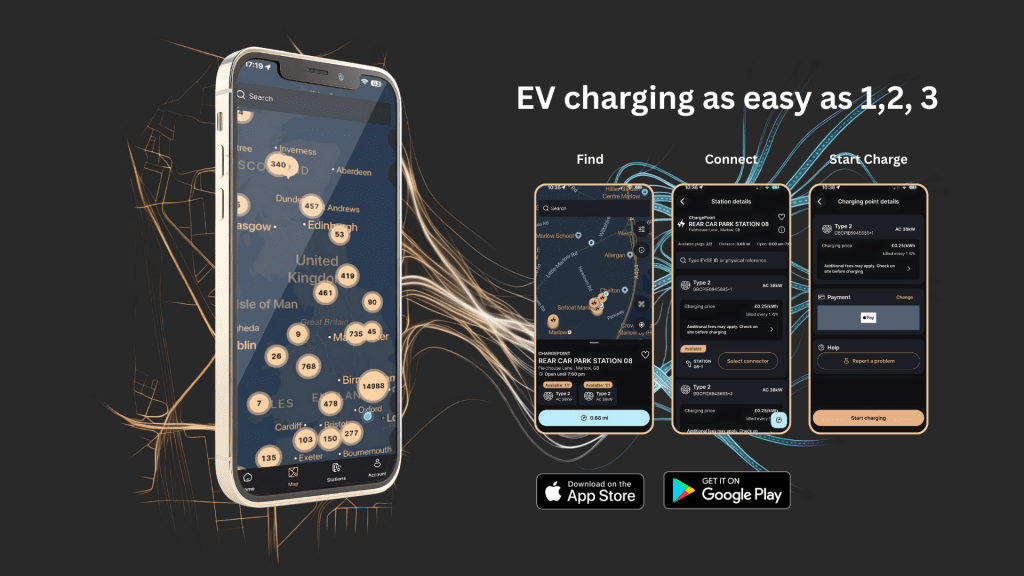
With ONEEV, UK and Ireland drivers can search for charging locations, check availability, view charger information, pay securely in-app where supported, and keep the charging experience simple from start to finish.
That matters because the cheapest charger is only useful if you can actually find it, use it and trust the process.
ONEEV helps drivers:
- Find public EV chargers near them or along a journey.
- Compare charger locations before arriving.
- Understand speed and charging options more clearly.
- Use secure in-app payment where available.
- Receive clear charging records and receipts.
- Avoid unnecessary app confusion.
If you are planning a journey, start with EV Charging Near Me. If you are new to public charging, read How to Charge Your EV in 4 Easy Steps with the ONEEV App. And if cost is your main concern, our guide to finding cheaper EV charging stations near you is a useful next step.
What UK drivers should do now
If you want to make public EV charging cheaper and easier in 2026, the best approach is not complicated.
1. Use rapid charging when you need speed, not out of habit
Rapid charging is brilliant on long journeys, but if you have time to park for longer, a slower public charger may cost less per mile.
2. Check the tariff before you drive there
Do not assume the nearest charger is the best value. Location, speed and network pricing can change the cost dramatically.
3. Look for charging that fits your actual routine
The best charger is often the one near something you were already doing: shopping, working, eating, exercising or visiting family.
4. Keep receipts and charging history organised
This is especially useful for company car drivers, business mileage, expenses and anyone who wants a clearer picture of EV running costs.
5. Use one app that reduces friction
The fewer moving parts, the better. Public charging should not require detective work before every journey.
The verdict: public charging is becoming cheaper, but smarter charging wins
Public EV charging in the UK is entering a new phase. The network is larger. Charging hubs are growing. Prices are becoming more competitive in places. The VAT debate is finally in the spotlight. Drivers without driveways are getting more attention. And more people are realising that the cost of running an EV depends heavily on how and where you charge.
So, is public EV charging finally cheaper than petrol?
For many drivers, it can be. But not by accident.
The real saving comes from making better charging decisions: choosing the right speed, checking the price, using reliable locations and keeping the experience simple.
That is the future of public charging. Not just more chargers. Smarter charging.
And that is exactly where ONEEV is focused.
Find smarter EV charging with ONEEV
Search, find, select and start charging with less confusion. ONEEV helps UK and Ireland EV drivers locate chargers, check options and pay securely in-app where supported.
Explore ONEEVFAQs
Is public EV charging cheaper than petrol in the UK?
Public EV charging can be cheaper than petrol, especially when drivers use slower or better-value public chargers and avoid relying only on premium rapid charging. The overall cost depends on the charger speed, location, tariff and driving efficiency.
Why is public EV charging more expensive than home charging?
Home charging usually benefits from domestic electricity rates and 5% VAT. Public charging is currently charged at 20% VAT and includes the cost of operating, maintaining and connecting public infrastructure.
Is rapid EV charging worth the higher price?
Rapid charging is worth it when time matters, especially on longer journeys. For routine charging, slower public chargers can often be better value if you are parked for longer.
How can I reduce public EV charging costs?
Compare charger prices before arriving, use rapid chargers only when needed, look for destination charging, avoid premium locations where possible and use an app such as ONEEV to find suitable charging options more easily.
What is the easiest way to find EV charging near me?
The easiest option is to use a dedicated EV charging app that shows nearby charging locations, availability, speed and payment options. ONEEV is designed to help UK and Ireland drivers find and use public EV charging with less confusion.