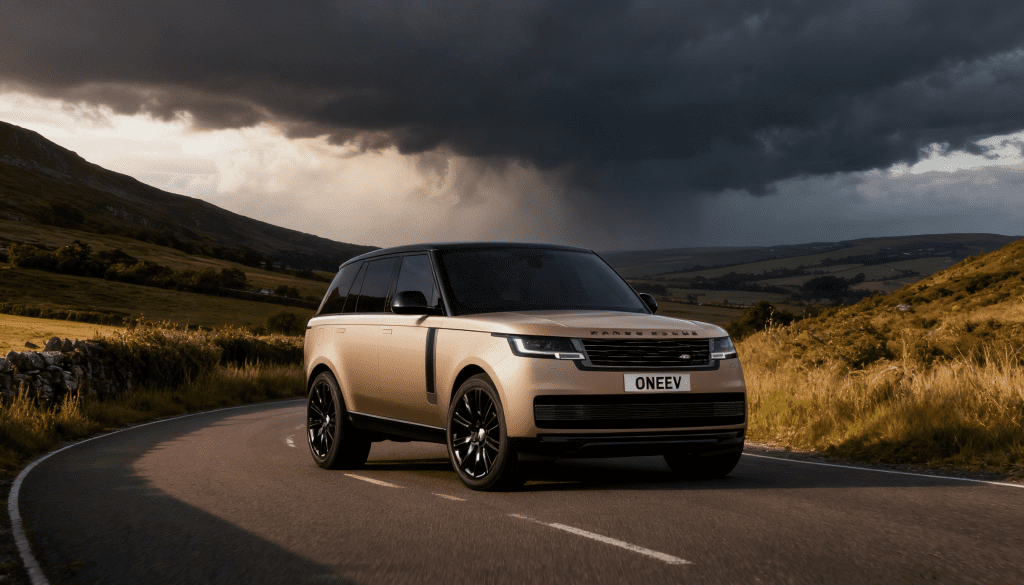
For the past two years, JLR has been teasing the electric future of its flagship SUV with Arctic test photos, engineering updates and the sort of carefully measured confidence that usually means something serious is coming. Now the picture is much clearer. The new Range Rover Electric is no longer just a rumour wrapped in camouflage. We now have official battery and engineering details, early prototype drive impressions, and a far better sense of how Land Rover plans to electrify one of the most recognisable luxury SUVs on earth.
If you were expecting a dramatic design revolution, you may need to sit down with a herbal tea and a less excitable imagination. Land Rover has wisely kept the familiar Range Rover silhouette intact. That means the electric version still looks every inch the big, elegant, effortlessly commanding SUV buyers expect. The real revolution sits underneath, where a new in-house battery, 800-volt architecture and twin-motor setup aim to deliver all the refinement and authority of a Range Rover without the combustion soundtrack.
In other words, this is not a styling exercise. It is Land Rover attempting to future-proof its most important badge without sacrificing the things buyers actually love about it.
The Battery and Range: Built to Feel Like a Proper Range Rover
One of the biggest official reveals so far is the battery itself. JLR says the Range Rover Electric uses a 117kWh high-voltage battery, running on an 800-volt electrical architecture and designed and built in-house. The pack uses 344 prismatic cells in a double-stacked layout and is intended to support the sort of performance, charging speed and all-terrain durability expected of a full-size luxury Range Rover.
That matters because Range Rover buyers do not want compromise dressed up as innovation. They want something that can feel perfectly at home gliding down the M4, turning up at a Mayfair hotel, or heading off into proper countryside without behaving like an expensive science experiment. JLR’s message is quite clear: this EV is being engineered as a Range Rover first and an electric car second.
Official WLTP range figures have still not been fully locked down in the live UK material, so it would be premature to state a final certified number as fact. However, independent industry coverage expects the real-world figure to land at a little over 300 miles, with prototype and preview reporting suggesting a likely WLTP outcome somewhere above that. That is a sensible expectation, but until Land Rover publishes the final homologated figure, it should still be treated as informed expectation rather than confirmed headline range.
ThermAssist and Winter Confidence
The most interesting engineering detail is probably ThermAssist, Land Rover’s thermal management system developed to improve efficiency and preserve usability in harsher temperatures. According to JLR, the system can reduce heating energy consumption and recover heat even in temperatures as low as minus 10 degrees Celsius. The company says this helps support cabin comfort and optimise range in cold-weather driving, which is especially relevant for UK drivers who know that winter can quietly flatten EV efficiency even when the roads themselves are perfectly civilised.
That is a big deal in a luxury SUV. Buyers at this level are not interested in wrapping themselves in three coats and pretending battery drain is part of the ownership experience. They expect warmth, comfort and composure. The Range Rover Electric appears to have been engineered with exactly that mindset.
Charging: The Bit Luxury Buyers Will Quietly Care About
Because the Range Rover Electric runs on an 800-volt platform, charging should be one of its real strengths. While Land Rover’s own recent communications focused more on architecture and battery engineering than a definitive public UK charging sheet, external preview coverage points to support for very fast DC charging, with 10 to 80 per cent replenishment expected to be possible in around 20 minutes on a suitably powerful charger. That places it exactly where a premium electric SUV should be in 2026.
For destination charging and day-to-day usability, AC charging support is also expected to be strong, which matters far more in the real world than many press launches like to admit. Fast charging is lovely on a long trip, but reliable routine charging is what makes ownership easy.
And that is where charging confidence becomes part of the luxury experience. A vehicle like this should not be paired with a clumsy public charging journey. Tools like the ONEEV app help drivers find suitable chargers, check availability, and pay securely across the network, which matters all the more once you move into larger premium EVs where time and convenience are part of the value equation.
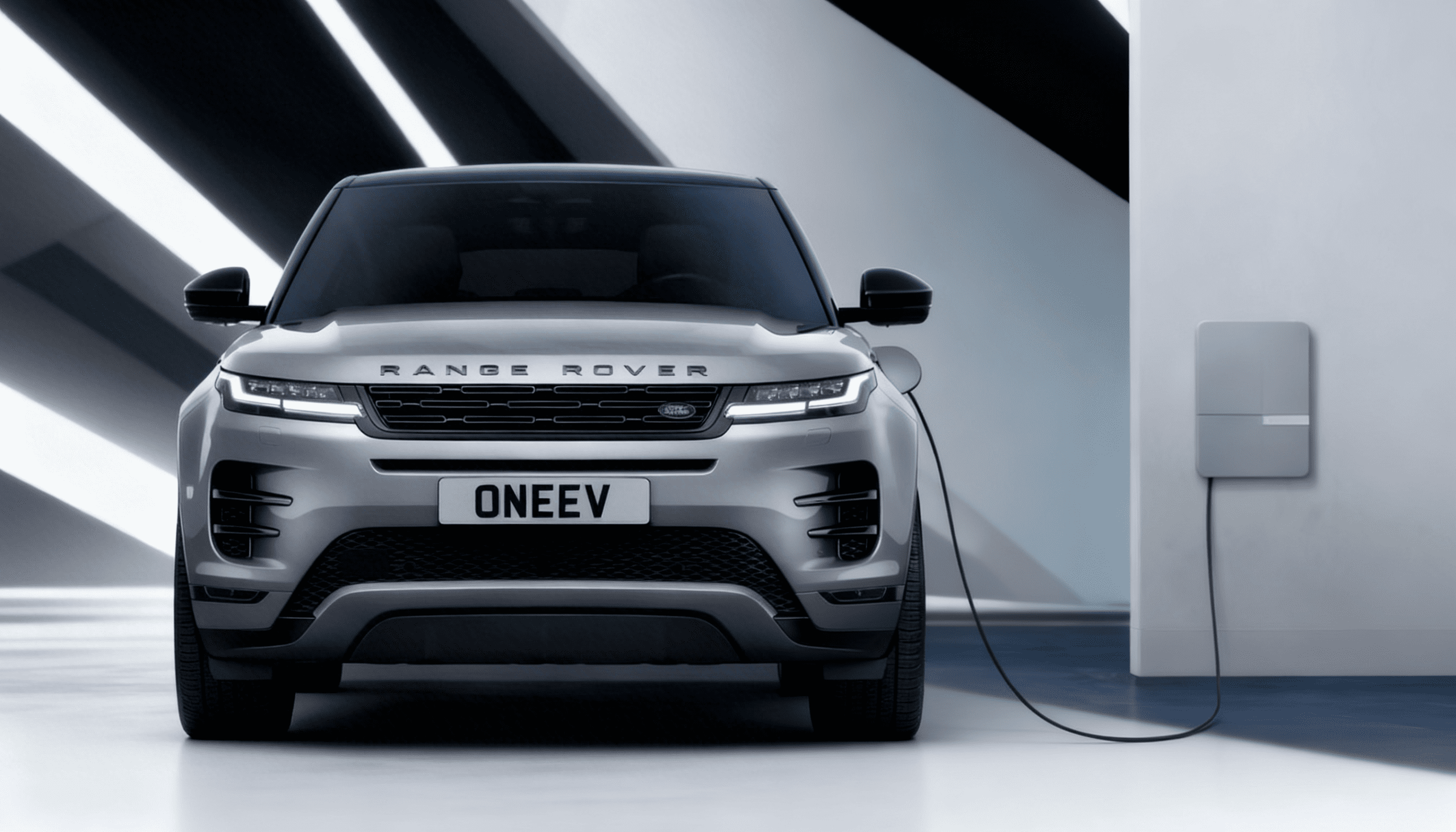
APP START IT. EASY
One of the biggest questions new EV drivers still ask is beautifully simple: how do I actually pay for charging? The good news is that it does not need to feel complicated, fragmented, or like a treasure hunt across half a dozen apps. With ONEEV, the process is designed to be exactly what modern charging should be: open the app, find a charger, check live status, plug in, pay securely, and get on with your day.
That is especially useful in a vehicle like the Range Rover Electric, where the expectation is not merely performance and luxury, but convenience. If you are driving a premium EV, you want the charging experience to feel smooth from start to finish. ONEEV helps remove the usual friction by bringing charger search, session start, and payment into one place, so you are not juggling logins, cards, or network confusion when you arrive.
In practical terms, paying for charging is simple. You set up your payment details in the app, choose a compatible charger, connect your car, and start the session directly from your phone where supported. The cost is handled securely within the app, giving drivers a cleaner and more confident charging experience. For people moving into electric driving for the first time, that ease matters just as much as range or charging speed.
If you are still learning the ropes, start with The ONEEV Beginner’s Guide to Effortless EV Charging, then explore How to Find Fast EV Chargers and How to Find EV Charging Stations Near You in the UK. Together, they make the switch from wondering how EV charging works to simply getting on with it.

Performance: Silent But Still Authoritative
Land Rover’s official winter testing material and prototype coverage indicate a dual-motor, all-wheel-drive setup producing around 542bhp and 850Nm of torque. That is enough to put the electric Range Rover directly into serious performance territory, with output broadly in line with the kind of effortless thrust buyers would expect from a flagship V8 model, only delivered with the instant response and smoothness electric motors naturally provide.
Just as importantly, JLR says its new traction and driveline control systems can manage wheel slip dramatically faster than their internal combustion equivalents. Prototype reporting has also highlighted the new Independent Driveline Distribution setup and the way the car has been engineered to preserve Range Rover’s off-road credibility, not merely its road manners. That is crucial, because a Range Rover without calm, all-condition confidence would feel like a Range Rover in name only.
Pricing and Availability: Still Premium, Still Range Rover
This will not be a cheap electric SUV wearing a posh badge. Independent UK preview coverage has estimated a starting point closer to £150,000 rather than £130,000, although final UK pricing has not yet been fully published in the official sources. That means it is safest to position the Range Rover Electric as a very high-end flagship product whose final retail ladder is still being clarified.
What is official is the scale of interest. JLR previously confirmed that pre-order books for the all-electric Range Rover would open, and later coverage reported very substantial early demand. So while final public delivery timing and trim walk-up pricing still need complete confirmation, the appetite for this car is already clearly there.
Why It Matters for UK Drivers
The Range Rover Electric matters because it is not just another EV launch. It is a test of whether a traditional luxury icon can move into the electric era without losing its character. Plenty of brands can build a fast electric SUV. Far fewer can build one that is expected to feel stately, beautifully isolated, technically confident and genuinely desirable in the way a Range Rover has to be.
For UK EV drivers watching from slightly more practical budgets, the lessons still matter. Battery thermal management, all-weather efficiency, charging convenience and route confidence are not just luxury-SUV concerns. They affect every part of EV ownership. That is why resources like The ONEEV Beginner’s Guide to Effortless EV Charging, How to Find Fast EV Chargers, and How to Find EV Charging Stations Near You in the UK continue to matter whether you drive a city EV or a six-figure luxury flagship.
Verdict
The Range Rover Electric already looks like one of the most important premium EVs of the year. Not because it is the most radical, and certainly not because it is trying to reinvent the visual identity of the car. Its importance lies in the opposite approach. Land Rover is taking something already deeply established, then rebuilding the engineering around electricity without throwing away the serenity, capability and status that define the badge.
If the finished production version delivers on what the official engineering detail and early prototype reports suggest, this will not be a compromised electric imitation of a Range Rover. It will be a Range Rover that simply happens to have moved on from petrol. And for a vehicle built around effortless supremacy, that may be the smartest evolution of all.