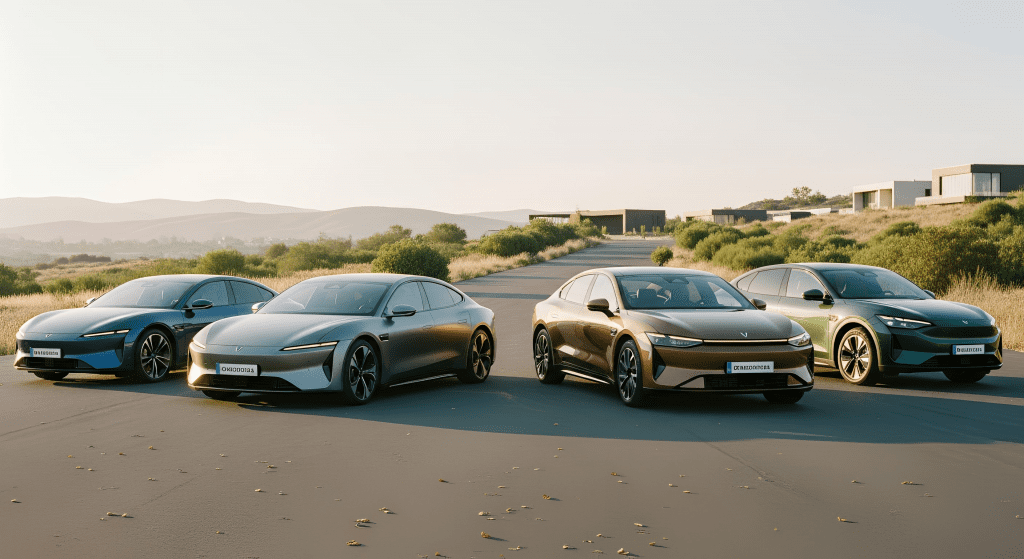
For years, range anxiety was the defining fear of electric driving. Not because EVs could not travel far, but because drivers were never quite sure how far “far” really was.
In 2026, that question has changed. A growing number of electric vehicles can now realistically approach or exceed 400 miles on a single charge under mixed real-world conditions.
This is the moment where long-distance capability stops being exceptional and starts becoming expected.
If you regularly plan long journeys or want reassurance around public charging, this remains a useful reference point: EV charging near me .
What “400 Miles” Really Means in 2026
Range figures are no longer just brochure numbers.
Advances in battery chemistry, aerodynamics, thermal management, and software efficiency mean that headline ranges are now much closer to what drivers experience on the road.
In practical terms, a 400-mile EV in 2026 means:
- 300+ miles achievable even in colder conditions
- Fewer charging stops on motorway journeys
- Greater flexibility around destination charging
The Core Members of the 400-Mile Club
Several models now consistently stand out for long-range capability.
Tesla Model S Long Range remains the benchmark, combining battery size with exceptional efficiency and charging speed.
Tesla Model 3 Long Range continues to deliver impressive distance relative to its size, making it a favourite for high-mileage drivers.
Mercedes EQS demonstrates how aerodynamics and luxury engineering can coexist with outstanding range performance.
Hyundai IONIQ 6 proves that smart design and efficiency can rival much larger battery packs.
Why Aerodynamics Matter More Than Battery Size
It is tempting to assume range is all about battery capacity.
In reality, drag is the silent enemy of distance. Vehicles with low drag coefficients consistently outperform heavier competitors with larger batteries.
This is why sleek saloons often travel further than larger SUVs, even when battery sizes are similar.
Real-World Driving Changes the Conversation
Drivers no longer need to plan every journey around chargers.
For many, a single overnight charge now covers an entire working week. Long trips become simpler, with one planned stop rather than several reactive ones.
This shift is as much psychological as it is practical. Confidence replaces caution.
Understanding how to charge efficiently on longer journeys still matters: public charging etiquette .
Who Actually Needs a 400-Mile EV?
Not everyone does.
For most daily use, far shorter ranges are perfectly adequate. However, certain drivers benefit significantly:
- High-mileage commuters
- Drivers without home charging
- Regular long-distance travellers
- Company car drivers covering multiple regions
For these groups, range reduces friction and planning overhead.
Charging Speed Still Matters
Range and charging speed work together.
A car that can drive far but charges slowly still interrupts journeys. The best long-range EVs combine distance with fast, reliable rapid charging.
UK infrastructure standards and rollout progress are outlined here: UK EV infrastructure strategy .
The End of Range Anxiety
Range anxiety is not eliminated by a single number.
It disappears when drivers stop thinking about range at all. In 2026, the 400-mile club is pushing EVs firmly into that territory.
For buyers today, the question is no longer “can it make the journey?” but “how comfortable do I want it to be?”
FAQs
Do any EVs really achieve 400 miles?
Yes. Several models can approach or exceed this under mixed real-world conditions.
Is motorway driving worse for range?
Yes. Higher speeds increase energy use, but long-range EVs still perform strongly.
Does cold weather ruin long range?
It reduces range, but modern thermal management limits the impact.
Are 400-mile EVs more expensive?
Often, but efficiency gains are bringing longer range to more accessible models.
Will ranges increase further?
Yes. Incremental improvements continue, but charging speed and efficiency are now just as important.