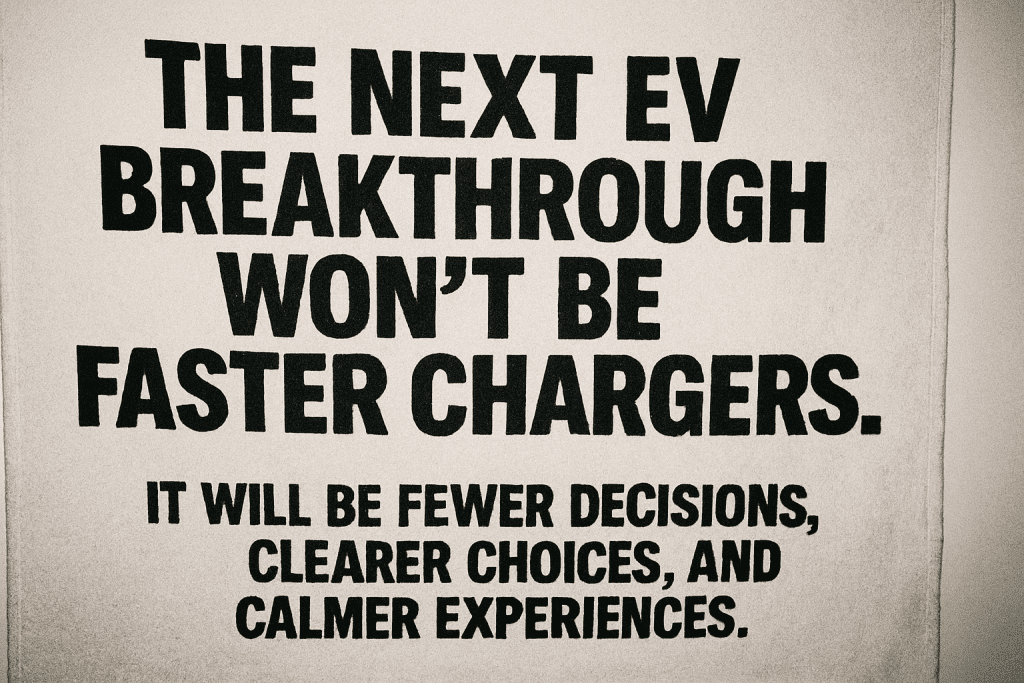
The EV industry loves a headline metric. Bigger batteries. Faster charging. Higher kilowatt numbers. Yet despite constant technical progress, many drivers still find public charging stressful.
The missing piece is not speed. It is simplicity. Specifically, the number of decisions drivers are forced to make at exactly the wrong moment.
Decision Fatigue at the Charger
Humans have a limited capacity for decisions. By the time a driver reaches a charger, they may already be navigating traffic, managing range, and adjusting plans.
Asking them to choose between tariffs, connectors, payment methods, memberships, and session rules is not empowerment. It is friction.
Optionality Feels Good. Until It Doesn’t.
Choice is often framed as freedom. In practice, too much choice creates hesitation and second-guessing. Drivers leave chargers wondering whether they picked the “right” option.
The best experiences remove decisions entirely. They present a clear, sensible default and allow drivers to proceed without mental negotiation.
Good EV Design Is Invisible
The most successful systems do not draw attention to themselves. They guide drivers smoothly from arrival to departure without demanding focus.
This is not about dumbing things down. It is about respecting cognitive limits and designing around real human behaviour, not idealised user journeys.
The Real Breakthrough
- Fewer choices presented at the point of use
- Clear defaults that feel fair
- Consistent session flows
- Confidence without explanation
Faster charging will always be welcome. But the real step change will come when drivers stop thinking about charging at all.