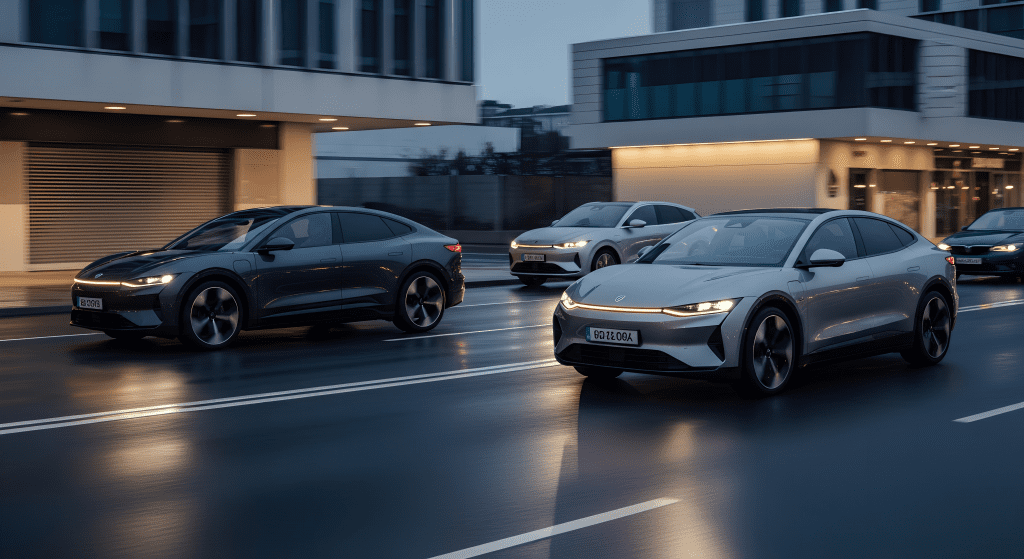
For years, the electric car was the automotive equivalent of steamed kale. Something you bought out of guilt, or to casually mention to your neighbours while queuing at an artisanal bakery. The early era was defined by compromised design, glacial acceleration, and the charm of a kitchen appliance that had lost the will to live.
But look around in 2026 and it is obvious something has changed. The kale has been deep-fried, heavily seasoned, and served with a side of outrageous performance. People are not buying electric cars because they want to save the planet. They are buying them because petrol cars are starting to feel oddly… outdated.
It’s a Gadget, Not a Gearbox
We live in a world where a smartphone is more powerful than the computer that put humans on the moon. So it feels increasingly absurd that a modern car should rely on cables, fluids, and spinning metal just to move forward.
Modern electric vehicles are not simply cars with batteries. They are software platforms on wheels. They receive over-the-air updates that can improve performance overnight. They offer vehicle-to-load functionality, meaning the car itself becomes a mobile power source. Screens stretch across dashboards, interfaces feel familiar, and the whole experience behaves more like consumer technology than mechanical transport.
Buying an EV purely for environmental reasons is like buying a private jet because you enjoy the complimentary peanuts. The real reason is the experience.
Torque: The Great Equaliser
In the old world, effortless acceleration was reserved for exotic machinery and equally exotic maintenance bills. Electric motors have rewritten that rulebook entirely.
Because an electric motor delivers all of its torque instantly, acceleration is immediate, smooth, and frankly shocking the first time you experience it. There is no turbo lag, no gearbox hesitation, and no mechanical drama. Just a silent, forceful surge that rearranges your internal organs with startling efficiency.
What was once supercar territory is now available in everyday family vehicles, and that changes expectations permanently.
The Return of Retro-Cool
Design has finally caught up with ambition. The best electric cars of 2026 no longer look like compliance exercises. They look desirable.
Retro-inspired silhouettes, confident lighting signatures, and playful details have replaced the anonymous, aerodynamic blobs of the past. These cars do not apologise for being electric. They celebrate it. They look like the future we were promised decades ago.
Why the Modern EV Wins
- Silence: The absence of engine noise transforms the cabin into a calmer, more refined space.
- Technology: Augmented reality head-up displays and intelligent driver assistance are now standard features.
- Storage: Removing a large combustion engine creates new storage space, including the now-famous front boot.
- Maintenance: Fewer moving parts mean fewer things to wear out, break, or generate expensive surprises.
The Verdict
The internal combustion engine is a remarkable piece of engineering, and it deserves respect. We will miss the sound, the character, and the ritual that came with it.
But electric vehicles are winning because they make life easier, faster, quieter, and more entertaining. Drivers are not embracing EVs out of obligation. They are choosing them because, for the first time in over a century, the most exciting car on the road no longer needs a tailpipe.